The U.S. Air Force announced Tuesday that its LGM-35A Sentinel intercontinental ballistic missile program will complete restructuring by the end of 2026, achieve its first test launch in 2027, and reach initial operational capability in the early 2030s.
The updated timeline is earlier than recent estimates but still years behind the program’s original 2029 target. The Northrop Grumman-built Sentinel is intended to replace the LGM-30G Minuteman III, which has been in service since the 1970s despite having an original design life of 10 years.
“We certainly have not lowered the bar, and we certainly have not taken on any risk by doing this,” Gen. Dale White, the direct reporting portfolio manager for critical major weapon systems, told Breaking Defense.
The Pentagon triggered a Nunn-McCurdy breach, a formal cost overrun notification to Congress, in January 2024 after the program’s projected cost spiked roughly 81% from $77.7 billion to about $160 billion. Officials rescinded the program’s Milestone B certification, which authorizes engineering and manufacturing development, and ordered a restructure. The Pentagon’s July 2024 review set a revised cost estimate of $140.9 billion, which White said is still being treated as a cap.
New Silos Over Refurbishment
Officials identified the primary challenge as unforeseen complications with modernizing 450 missile silos spread across five states. The structures date back to the early 1960s and are connected by thousands of miles of cables. During the restructure, the Air Force determined that building new silos would be faster and less risky than refurbishing the existing facilities.
“The decision to build new silos avoids the unpredictable costs and safety hazards of excavating and retrofitting 450 unique structures built over 50 years ago,” the Air Force said in a release.
Construction has started on the first of three new command and control centers at F.E. Warren Air Force Base in Wyoming and on test facilities at Vandenberg Space Force Base in California. Teams plan to break ground on a prototype launch silo at Northrop Grumman’s Promontory, Utah facility this month, the Air Force said.
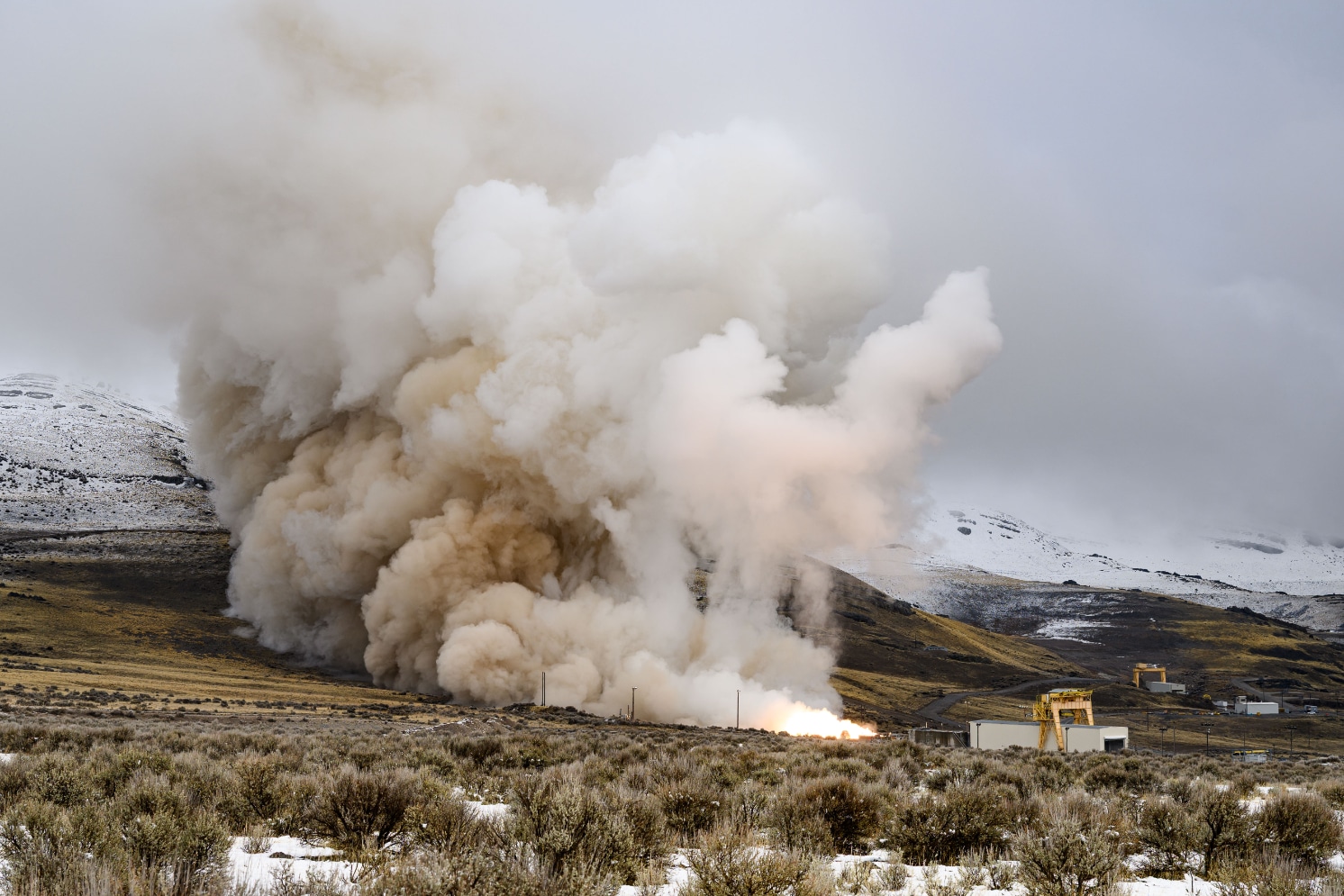
The program has also completed qualification tests on the first and second stages of the Sentinel’s solid rocket motor.
DRPM Role Consolidates Authority
Defense Secretary Pete Hegseth created the DRPM position last August to oversee the Air Force’s most critical programs, including Sentinel, the F-47 sixth-generation fighter, and the B-21 Raider stealth bomber. White was confirmed for the role in December.
“The DRPM has the direct authority to make decisions, informed by integrated inputs across the enterprise,” White said. “That construct allows us to resolve tradeoffs quickly and move with the speed required to deliver credible deterrence.”
Todd Harrison, a defense budget expert at the American Enterprise Institute, told Defense One that the arrangement reflects the program’s importance. “Sentinel is definitely one of those, because we don’t have an alternative,” he said. “We don’t have a fallback.”
The announcement came the same day the New START treaty with Russia formally expired. White said he had not yet seen any impacts from the arms control treaty’s lapse on the Sentinel project.