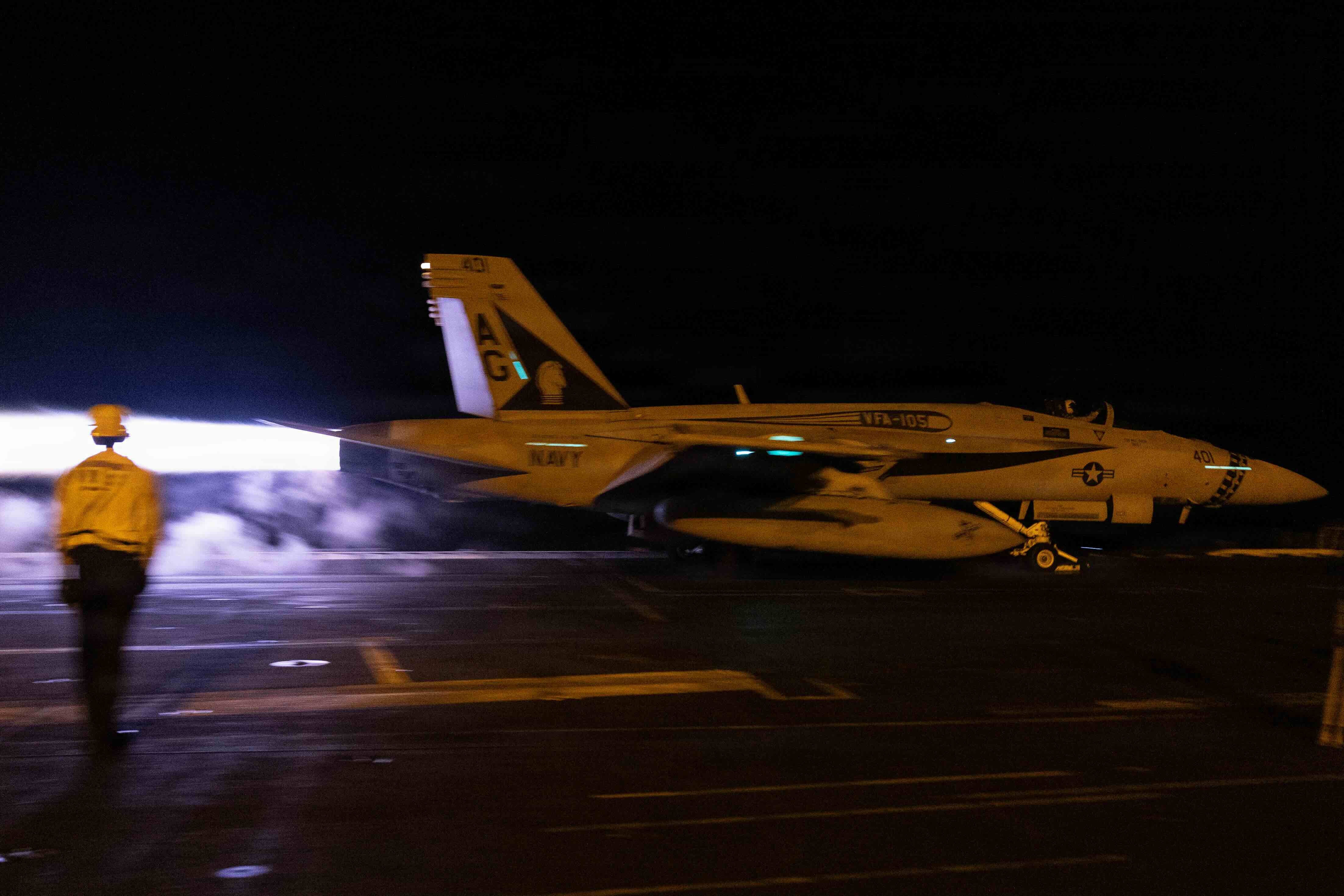
A U.S. Navy F/A-18 Super Hornet from USS Abraham Lincoln (CVN 72) disabled a Palau-flagged oil tanker in the Gulf of Oman on Monday after its crew failed to comply with directions from U.S. forces enforcing the naval blockade of Iran.
U.S. Central Command (CENTCOM) identified the vessel as M/T Marivex, an unladen tanker transiting international waters toward Iran. The F/A-18 fired a precision munition into the ship’s engineering and steering spaces after the crew did not respond to warnings. MarineTraffic data records the Marivex as approximately 135 meters long and 22 meters wide. “Marivex is no longer sailing to Iran,” CENTCOM stated.
The Marivex is the seventh vessel CENTCOM has disabled since the blockade took effect on April 13. Since then, 134 ships have complied with warnings and been redirected, and 42 vessels carrying humanitarian aid have been permitted to pass.
The previous interdiction came on June 2, when U.S. forces disabled Botswana-flagged M/T Lexie as it approached Iran’s Kharg Island oil export terminal.
Monday’s enforcement came as President Trump posted on Truth Social calling for an immediate halt to fighting. “Both sides, Israel and Iran, are looking to do an immediate CEASEFIRE,” Trump wrote, adding that final peace negotiations were proceeding “subject to ignorance or stupidity getting in its way.” Both countries signaled a pause in overnight strikes, though each warned that renewed aggression from the other side would force a resumption.
The Marivex differs from previous interdictions in the simultaneous targeting of both engineering and steering spaces in a single strike, rather than a single system. Earlier enforcements used 20mm cannon rounds against M/T Hasna’s rudder on May 6 and a Hellfire missile against M/T Lexie’s engine room on June 2.
The variation in methods across seven disabled vessels points to a deliberate, vessel-specific disablement approach rather than a fixed strike method.