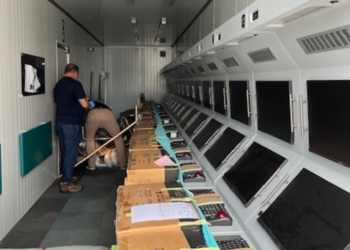
A South African aviation training company built mobile classrooms designed to teach Chinese military pilots how to track American submarines, then shipped them aboard a state-owned Chinese vessel until US authorities intercepted the cargo in Singapore, according to a federal forfeiture complaint unsealed Thursday.
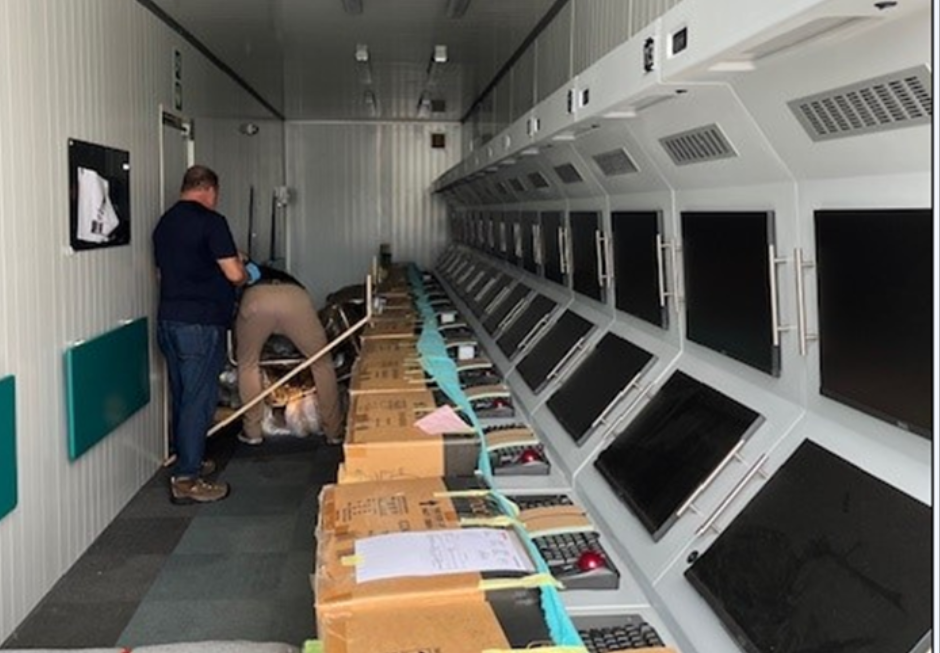
The Justice Department wants permanent custody of two shipping containers that prosecutors say held sophisticated crew training systems modeled on Boeing’s P-8 Poseidon, the patrol aircraft the US Navy relies on to find and target enemy submarines across the Pacific.
The Test Flying Academy of South Africa developed the equipment using software rooted in an American simulator program, then layered in technical data from Western anti-submarine platforms, the government alleges. Former military aviators from NATO countries who had flown ASW missions joined the project team to ensure the training matched real-world Western procedures, according to court filings.
TFASA has rejected every major allegation, calling the Justice Department’s claims “factually incorrect or misleading” and describing the seized containers as simple instructional spaces with no tactical capabilities.
Inside ‘Project Elgar’
Court documents reveal TFASA staff referred to the effort as “Project Elgar.” The goal, prosecutors say, was giving PLA aircrews the knowledge to locate and trail American submarines operating in contested waters.
Engineers configured the container interiors to resemble crew stations aboard the P-8, according to the complaint. They allegedly started with commercially licensed American simulation software, then reworked it extensively using restricted technical specifications from the Poseidon and other Western patrol aircraft.
“TFASA masquerades as a civilian flight-training academy when in fact it is a significant enabler of the Chinese air and naval forces and a pipeline for transferring NATO aviation expertise, operational knowledge, and restricted technology directly to the People’s Liberation Army,” said Assistant Attorney General for National Security John A. Eisenberg.
Investigators seized the containers in 2024 as they sat aboard a COSCO freighter bound for China. The Justice Department invoked export control statutes governing both military articles and dual-use technology.
TFASA fired back in a statement on its website, insisting the training units contained nothing classified, sensitive, or tailored for combat operations.
“The containers in question were basic mobile classroom units and did not comprise or represent any form of tactical simulators, advanced systems, or any classified, sensitive, or mission-specific, tailored military training capabilities,” the company said.
Academy officials maintained they anticipated international scrutiny and submitted the shipment for review by relevant authorities before it left South Africa. An investigation the company described as independent found no evidence of export violations, according to TFASA.
Washington has scrutinized TFASA before. The Commerce Department placed the academy and affiliated companies on its trade blacklist in mid-2023, concluding that its pilot programs served Chinese military interests in ways that threatened American security.
“The Test Flying Academy of South Africa illegally exported U.S. military flight simulator technology and recruited former NATO pilots for the purpose of training China’s military, jeopardizing U.S. national security and placing the lives of American service members at risk,” said FBI Assistant Director Roman Rozhavsky.
The FBI and Homeland Security Investigations ran the interdiction with assistance from Commerce Department export enforcement staff.