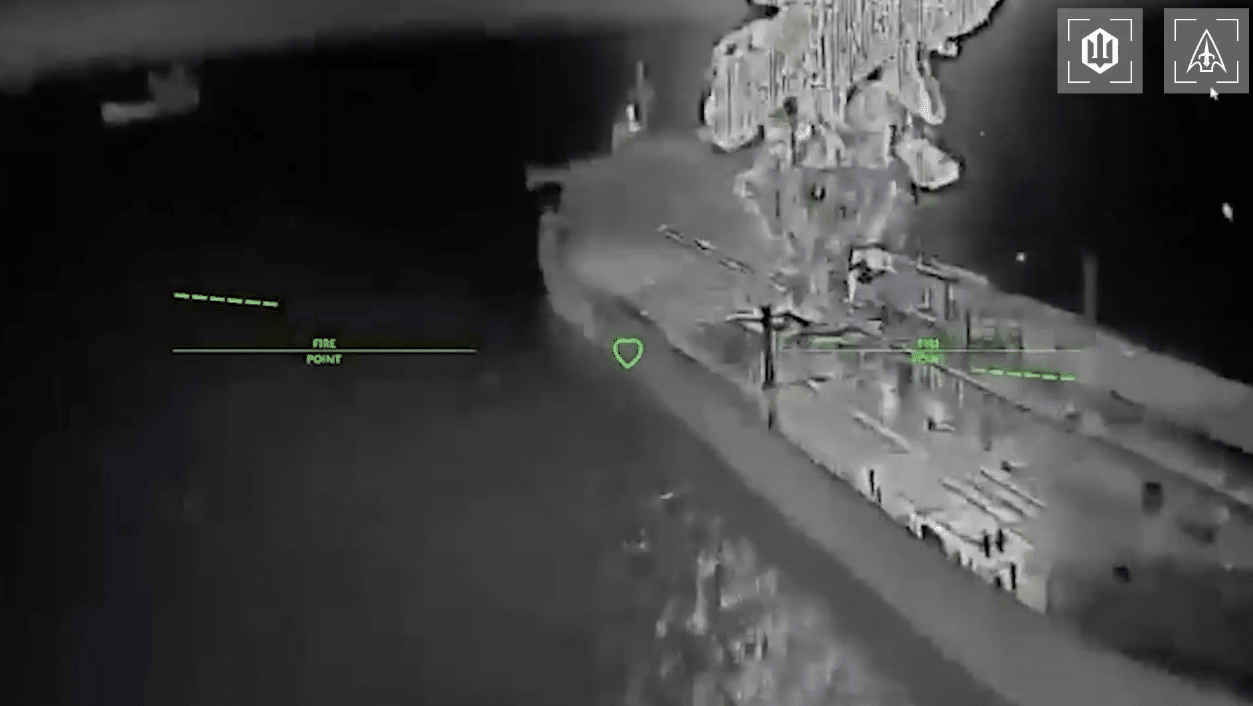
Ukraine’s Unmanned Systems Forces (USF) struck 11 more Russian vessels overnight on July 13-14, bringing the nine-day total under Operation MoLoChKa to 116 ships targeted in the Sea of Azov.
Operators from the 1st USF Corps, the 413th Raid Regiment, and K-2 Army units conducted the overnight strikes, USF Commander Robert “Magyar” Brovdi stated. The targets included five tankers, five dry cargo ships, and one tugboat.
The USF’s official X account published the breakdown of participating units and confirmed the strike totals on July 14.
💥 116 Vessels in 9 Days: USF Operators Struck 11 More Enemy Vessels Overnight
Here are more details on the results of the operation:
⚓ 5 tankers in the Sea of Azov were struck by operators of the @1usc_army , @Raid_413 and the @k_2army
⚓ 5 cargo ships in the Sea of Azov… pic.twitter.com/OcwTLJx8dM
— 🇺🇦 Unmanned Systems Forces (@usf_army) July 14, 2026
Brovdi said the operation targets Russia’s feeder fleet, small and medium flat-bottomed tankers roughly 460 feet long with a deadweight of approximately 7,000 tonnes. These vessels move oil through the Volga-Don Canal from inland ports and terminals to larger tankers waiting in the Black Sea.
A single large-capacity export tanker requires between 12 and 15 of these feeder vessels to fill, meaning each one disabled directly reduces Russia’s ability to load and dispatch oil at scale.
“The shadow fleet is wasting away, but it must disappear as a species,” Brovdi wrote on Telegram.
The USF said the tankers transport oil and petroleum products in circumvention of international sanctions, generating revenue that finances Russia’s military operations. Brovdi stated the campaign also cuts fuel supplies to Russian forces in occupied Crimea.
Russia’s Ministry of Agriculture said on July 14 it is preparing to use “alternative shipping routes” and may redirect cargo “to other modes of transport.” The ministry said the disruption would not affect export volumes or domestic food supplies, though neither the agriculture nor transport ministries specified which alternative ports would be used.
The Sea of Azov route handles approximately 25% of Russia’s grain exports. Shipping in the sea remained restricted on July 14, according to Reuters, marking the largest disruption to Black Sea grain trade since Russia’s full-scale invasion began in February 2022.