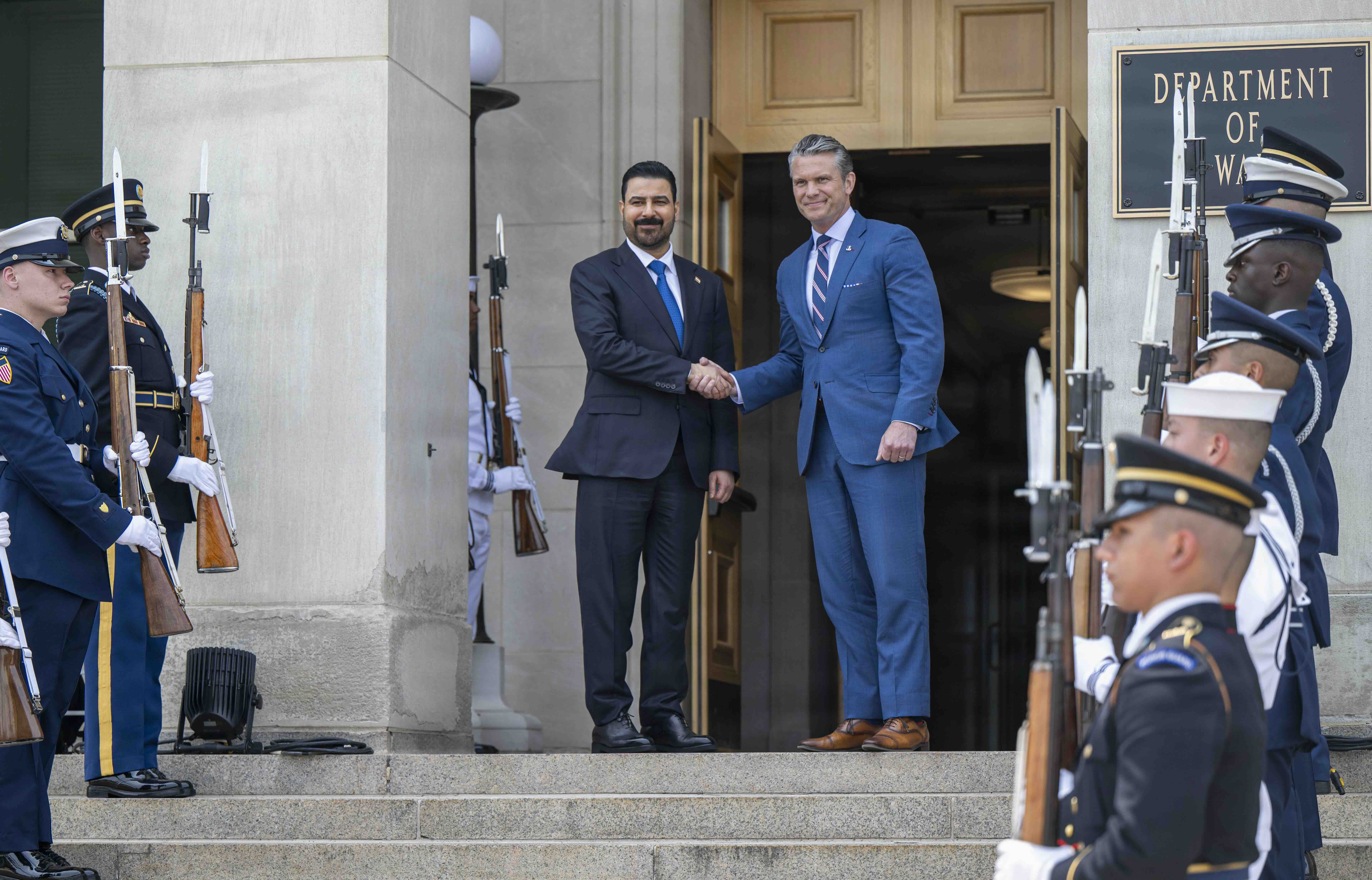
The United States will withdraw all remaining military forces from Iraq by Sept. 30, Iraqi Prime Minister Ali al-Zaidi announced Tuesday during a meeting with President Donald Trump at the White House.
“On the 30th of September, the U.S. forces will be out of Iraq,” al-Zaidi said when speaking to reporters alongside President Trump in the Oval Office. “After 30 September, we will not allow any entity to bear arms outside the state.”
Al-Zaidi’s government has linked the withdrawal to efforts to disarm powerful Iran-backed militias and ensure that only state security forces can carry weapons.
The U.S. entered Iraq in 2003, overthrowing former leader Saddam Hussein, and later returned with an international coalition in 2014 to help defeat Islamic State. Although the group lost its territorial control, remnants continue to carry out attacks in Iraq and Syria.
The withdrawal would mark another major reduction of the U.S. military presence in the region after Trump ordered the removal of American forces from Syria earlier this year. It follows a 2024 withdrawal agreement between Washington and Baghdad that established a phased drawdown of U.S. forces in Iraq.
About 2,000 U.S. troops remain stationed in the country, with most deployed at Harir Air Base in Erbil in the northern Kurdistan region.
Trump said the U.S. no longer needs a military presence in Iraq. “Well, we don’t think we need the military there anymore,” Trump said.
The withdrawal plan was announced alongside discussions on expanding economic ties between Washington and Baghdad, with Trump saying the two countries would pursue new business opportunities, particularly in Iraq’s energy sector.
“We’re going to be doing a lot of deals,” Trump said. “We’re going to create a lot of jobs for both countries, and we’re going to be taking out a lot of oil,” he said, without providing further details.
Two Iraqi officials told DW News that Iraq, Chevron, TI Capital and Qatar’s UCC are expected to sign a deal Friday to develop a 2 million-barrel-per-day oil pipeline connecting Basra to Haditha and extending to ports in Turkey and Syria.