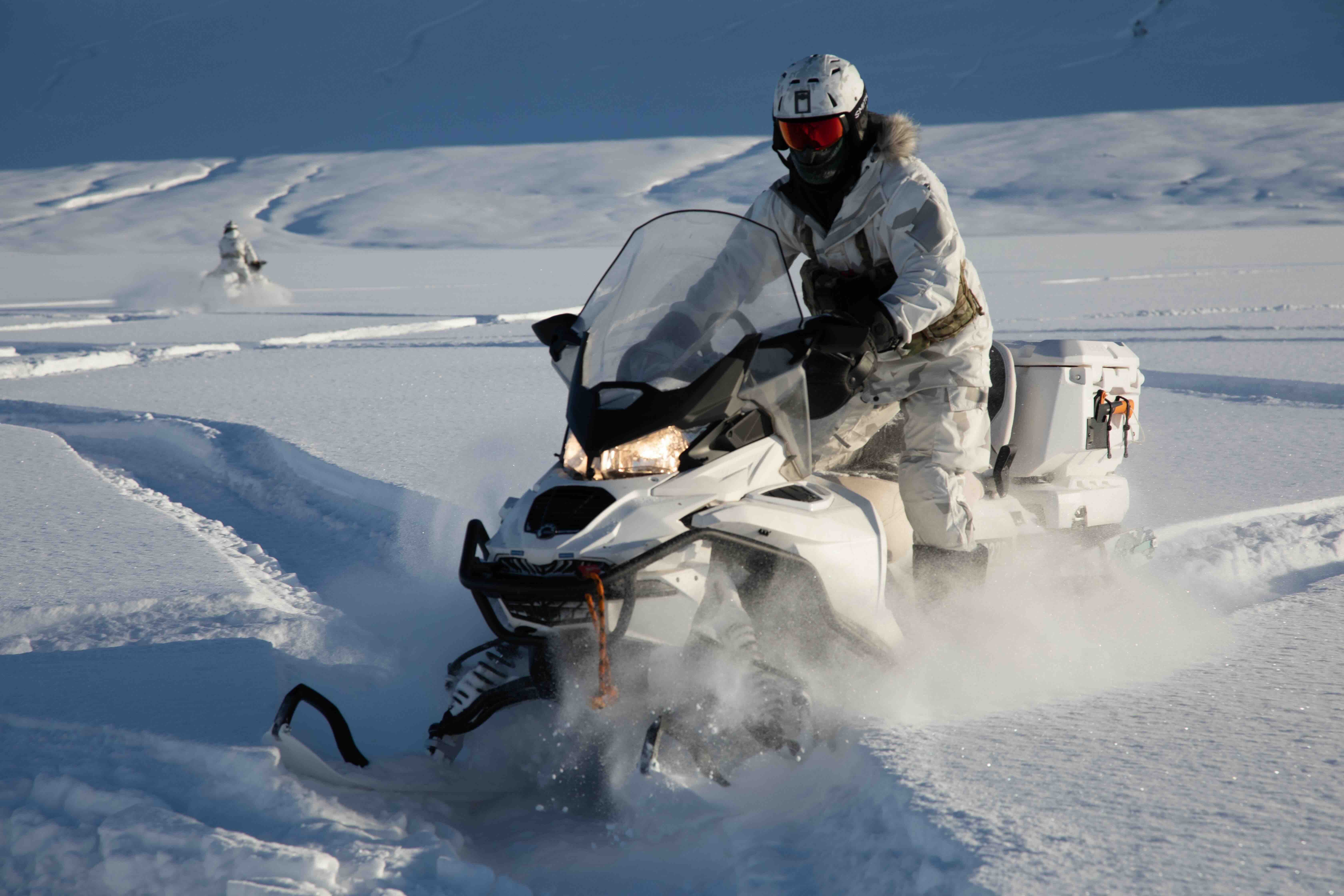
The U.S. is seeking to expand its military presence in Greenland, including adding special operations forces and gaining access to three new areas on the Arctic island, the head of U.S. Northern Command (NORTHCOM) told lawmakers last week.
NORTHCOM commander Gen. Guillot said the U.S. is in talks with Denmark and Greenland to broaden operations beyond its current footprint, as part of a wider strategy to strengthen homeland defense and Arctic capabilities.
Guillot said the expansion would support the proposed Golden Dome missile defense system. He also emphasized the need to launch fighters and tankers as “the first line of defense” against cruise missiles that could be launched from the Arctic, along with establishing ports to support special operations forces and U.S. Navy operations.
“We’re very well established in Canada and Alaska and having more capability along what I call the 2 o’clock approach would be key,” he told the Senate Armed Services Committee, referring to Greenland’s location on the eastern side of the Arctic.
The proposed expansion would take place under a 1951 defense agreement with Denmark, which governs U.S. military activity on the semiautonomous island. The agreement allows Washington to build facilities, station troops and operate in designated defense areas while Denmark retains sovereignty.
The U.S. currently operates one installation in Greenland, Pituffik Space Base, formerly known as Thule Air Base. Located in the northern part of the island, the base provides significant space-based capabilities but limited support for fighter jets, tankers and maritime operations.
“What we have now is access to Pituffik Air Base, which is at the northern part of Greenland, which gives us some of the fighter and tanker capability and a lot of space capability, but we don’t have a permanent presence for [special operation forces] and then we don’t have a permanent presence for some of the maritime capabilities that I need,” Guillot said.
Guillot said talks with Greenland and Denmark have been “very productive,” noting that the 1951 agreement is “very favorable to our operations or potential operations in Greenland.”
He added that he has maintained a strong relationship with the Danish military and is looking for “new and improved” ways to cooperate.
Guillot’s remarks come just two months after tensions over the island peaked. President Donald Trump had repeatedly expressed his intent for the U.S. to take control of Greenland for national security reasons, even raising the possibility of using force.
Greenland’s geopolitical importance has increased due to its location in the Arctic, where Russia and China have expanded their military and economic activities.
In January, allied nations deployed troops to Greenland, including forces from Germany, France and the Netherlands, on what was described as a “reconnaissance mission” in support of Denmark. Reports said these deployments were in preparation for a potential armed conflict with U.S. forces over the island.