• Home
  • News
    • Global Operations
      • Asia
      • Africa
      • Europe
      • Latin America
      • Middle East
      • North America
    • Industry
      • Asia
      • Africa
      • Europe
      • Latin America
      • Middle East
      • North America
      • Oceana
    • Special Interest
      • Asia
      • Africa
      • Europe
      • Latin America
      • Middle East
      • North America
      • Oceana
  • Market
    • Coming Soon
  • Intelligence
    • Job Board
    • Events
    • USMC Deception Manual
  • Resources
    • Contact Us
    • About Us
    • Editorial Policy
    • Privacy Policy
  • Home
  • News
    • Global Operations
      • Asia
      • Africa
      • Europe
      • Latin America
      • Middle East
      • North America
    • Industry
      • Asia
      • Africa
      • Europe
      • Latin America
      • Middle East
      • North America
      • Oceana
    • Special Interest
      • Asia
      • Africa
      • Europe
      • Latin America
      • Middle East
      • North America
      • Oceana
  • Market
    • Coming Soon
  • Intelligence
    • Job Board
    • Events
    • USMC Deception Manual
  • Resources
    • Contact Us
    • About Us
    • Editorial Policy
    • Privacy Policy
Login
Join Free
Home
Asia
Africa
Europe
Latin America
Middle East
North America
Asia
Africa
Europe
Latin America
Middle East
North America
Asia
Africa
Europe
Latin America
Middle East
North America
Coming Soon
Job Board
Events
Contact Awards
USMC Deception Manual
Login
Join Free
Home Global Operations

U.S. Navy’s $1 Trillion Fleet Expansion Faces Cost Overruns, Delays, and Challenges

  • Editor Staff
  • January 10, 2025
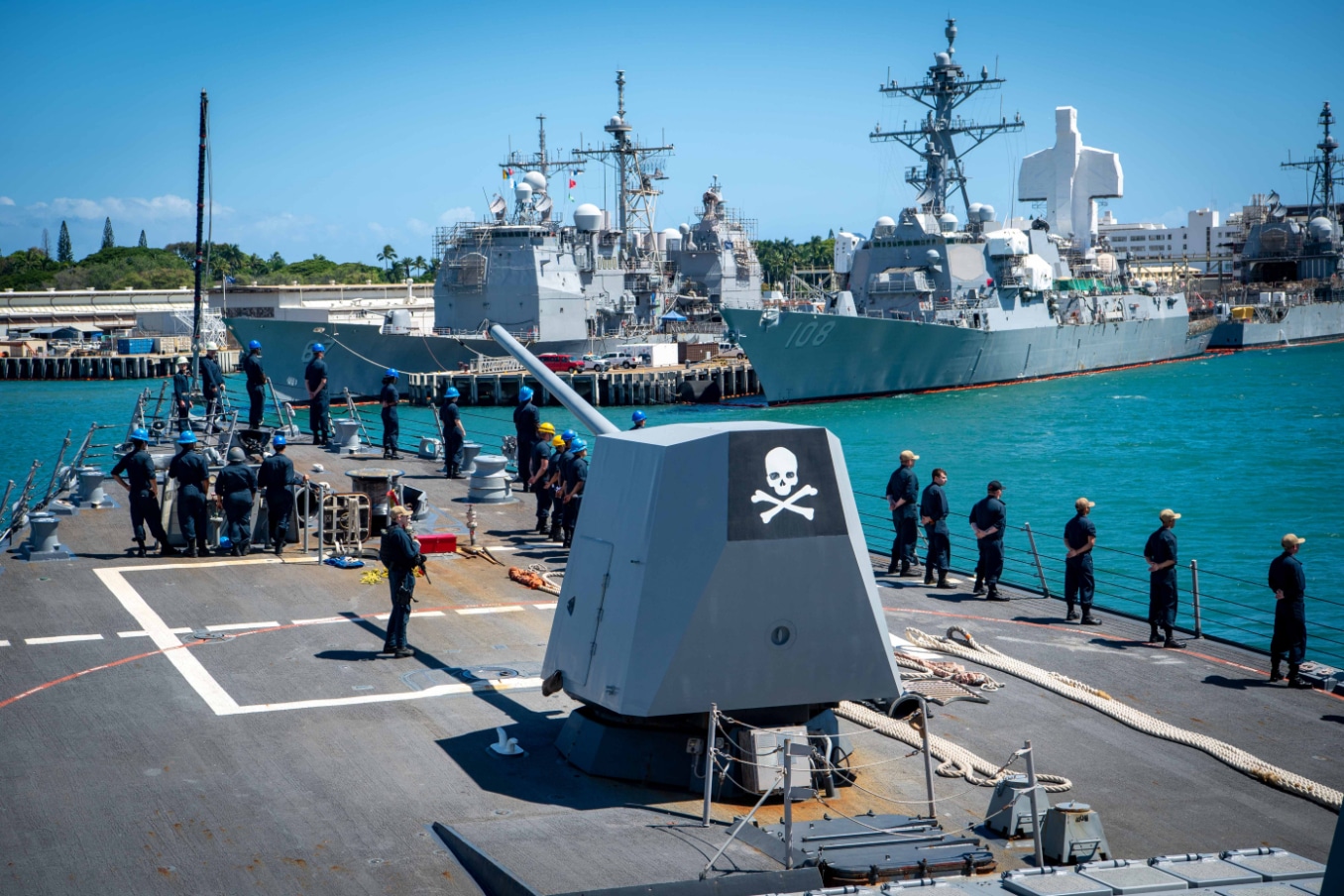
Arleigh Burke-class guided-missile destroyer USS Kidd (DDG 100) departs Pearl Harbor, Hawaii. (U.S. Navy photo by Mass Communication Specialist Seaman Kenneth Ostas)
Share on FacebookShare on TwitterLinkedIn

The U.S. Navy’s plan to expand its battle force fleet to 381 ships by 2054 will require an estimated $40.1 billion annually—more than double current funding levels—according to a Congressional Budget Office (CBO) report released Jan. 6. The 30-year shipbuilding blueprint, aimed at countering China’s growing naval power, represents a financial commitment exceeding $1 trillion and faces hurdles including rising costs, production delays, and industrial constraints.

The Navy’s 2025 shipbuilding plan calls for the construction of 85 new ships, expanding the fleet from 296 manned vessels to 381, while adding 134 unmanned surface and subsurface vehicles. Achieving this goal would require sustained funding levels not seen since the military buildup of the 1980s. The CBO estimates costs could exceed Navy projections by 8% to 16%, citing the complexity of modern ship designs and underestimated production challenges.

The Navy’s expansion is already grappling with escalating costs and delays. The Arleigh Burke-class Flight III destroyers, a cornerstone of the future fleet, now cost $2.5 billion per ship, up from $2.1 billion, with additional increases anticipated. Production delays have also affected critical vessels, including the next-generation DDG(X) destroyers and Virginia-class submarines. Initial estimates of $3.3 billion per DDG(X) have risen to $4.4 billion, driven by design complexities and advanced technology requirements.

Submarine production has similarly struggled. While the Navy planned to build two Virginia-class attack submarines annually, U.S. shipyards have averaged just 1.2 per year over the past decade. Meeting future demand will require an estimated 100,000 additional shipyard workers, but recruiting and training the workforce remains a significant challenge.

The fleet expansion is driven by escalating maritime competition with China, which now has the world’s largest navy by number of ships. China’s shipbuilding industry has surpassed U.S. production rates, delivering warships faster and at lower costs. The Pentagon has warned that China’s naval modernization and anti-ship missile capabilities pose significant threats, particularly in the event of a conflict over Taiwan.

The CBO report highlights the challenges facing the U.S. shipbuilding industry, which controls just 0.13% of the global market compared to China’s 46%. U.S. shipyards have been hampered by cost inefficiencies, outdated infrastructure, and labor shortages. The Navy is exploring partnerships with allied shipyards in South Korea and Japan for maintenance and repairs, though U.S. law restricts the purchase of foreign-built ships.

The Navy expects its fleet size to decline temporarily before growing under the new plan. The fleet is projected to shrink to 283 vessels by 2027 due to the retirement of older ships, before gradually increasing in the 2030s. This near-term decline has raised concerns about readiness, as U.S. military leaders warn that China could be capable of invading Taiwan by 2027.

To support the expanded fleet, the Department of the Navy’s total budget would need to rise from $255 billion to $340 billion annually, intensifying competition for defense resources. The plan’s feasibility will depend on addressing industrial bottlenecks, controlling costs, and maintaining consistent funding over the coming decades.


Editor Staff

Editor Staff

The Editor Staff at SOFX comprises a diverse, global team of dedicated staff writers and skilled freelancers. Together, they form the backbone of our reporting and content creation.

Subscribe
Login
Notify of
guest
guest
0 Comments
Oldest
Newest Most Voted
Inline Feedbacks
View all comments
ADVERTISEMENT

Trending News

U.S. Seizes Sanctioned Tanker off Venezuela’s Coast

U.S. Seizes Sanctioned Tanker off Venezuela’s Coast

by Editor Staff
December 11, 2025
0

U.S. forces seized a sanctioned oil tanker off Venezuela’s coast, President Donald Trump announced Wednesday.  “We’ve just seized a tanker...

SOFX CEO responds to Joe Lonsdale’s promotion of Peter Thiel Lecture Series

SOFX CEO responds to Joe Lonsdale’s promotion of Peter Thiel Lecture Series

by Editor Staff
December 5, 2025
24

On Tuesday, American entrepreneur and venture capitalist Joe Lonsdale sent out a Substack edition in which he encouraged readers to...

US Coast Guard Seizes 20,000 Pounds of Cocaine in Eastern Pacific

US Coast Guard Seizes 20,000 Pounds of Cocaine in Eastern Pacific

by Editor Staff
December 8, 2025
4

The U.S. Coast Guard cutter USCGC Munro seized over 20,000 pounds of cocaine from a single ship this week, the...

ADVERTISEMENT
ADVERTISEMENT
Next Post
Iranian General Criticizes Russia and Admits Strategic Loss in Syria After Assad’s Fall

Iranian General Criticizes Russia and Admits Strategic Loss in Syria After Assad's Fall

Denmark Addresses Greenland Defense Neglect as U.S. Interest Grows

Denmark Addresses Greenland Defense Neglect as U.S. Interest Grows

997 Morrison Dr. Suite 200, Charleston, SC 29403

News

  • Global Operations
  • Special Interest
  • Industry
  • Global Operations
  • Special Interest
  • Industry

Resources

  • About Us
  • Contact Us
  • Advertise with Us
  • Editorial Policy
  • Privacy Policy
  • About Us
  • Contact Us
  • Advertise with Us
  • Editorial Policy
  • Privacy Policy
No Result
View All Result
  • Home
  • News
    • Global Operations
      • Asia
      • Africa
      • Europe
      • Latin America
      • Middle East
      • North America
    • Industry
      • Asia
      • Africa
      • Europe
      • Latin America
      • Middle East
      • North America
      • Oceana
    • Special Interest
      • Asia
      • Africa
      • Europe
      • Latin America
      • Middle East
      • North America
      • Oceana
  • Market
    • Coming Soon
  • Intelligence
    • Job Board
    • Events
    • USMC Deception Manual
  • Resources
    • Contact Us
    • About Us
    • Editorial Policy
    • Privacy Policy
Subscribe
This website uses cookies. By continuing to use this website you are giving consent to cookies being used. Visit our Privacy and Cookie Policy.

Log in to your account

Lost your password?
wpDiscuz