The U.S. State Department has approved a potential $1.96 billion Foreign Military Sale to Saudi Arabia, led by guidance kits for up to 20,000 Advanced Precision Kill Weapon System II (APKWS-II) laser-guided rockets, the same munition the U.S. Air Force now relies on as its primary anti-drone weapon in the Middle East.
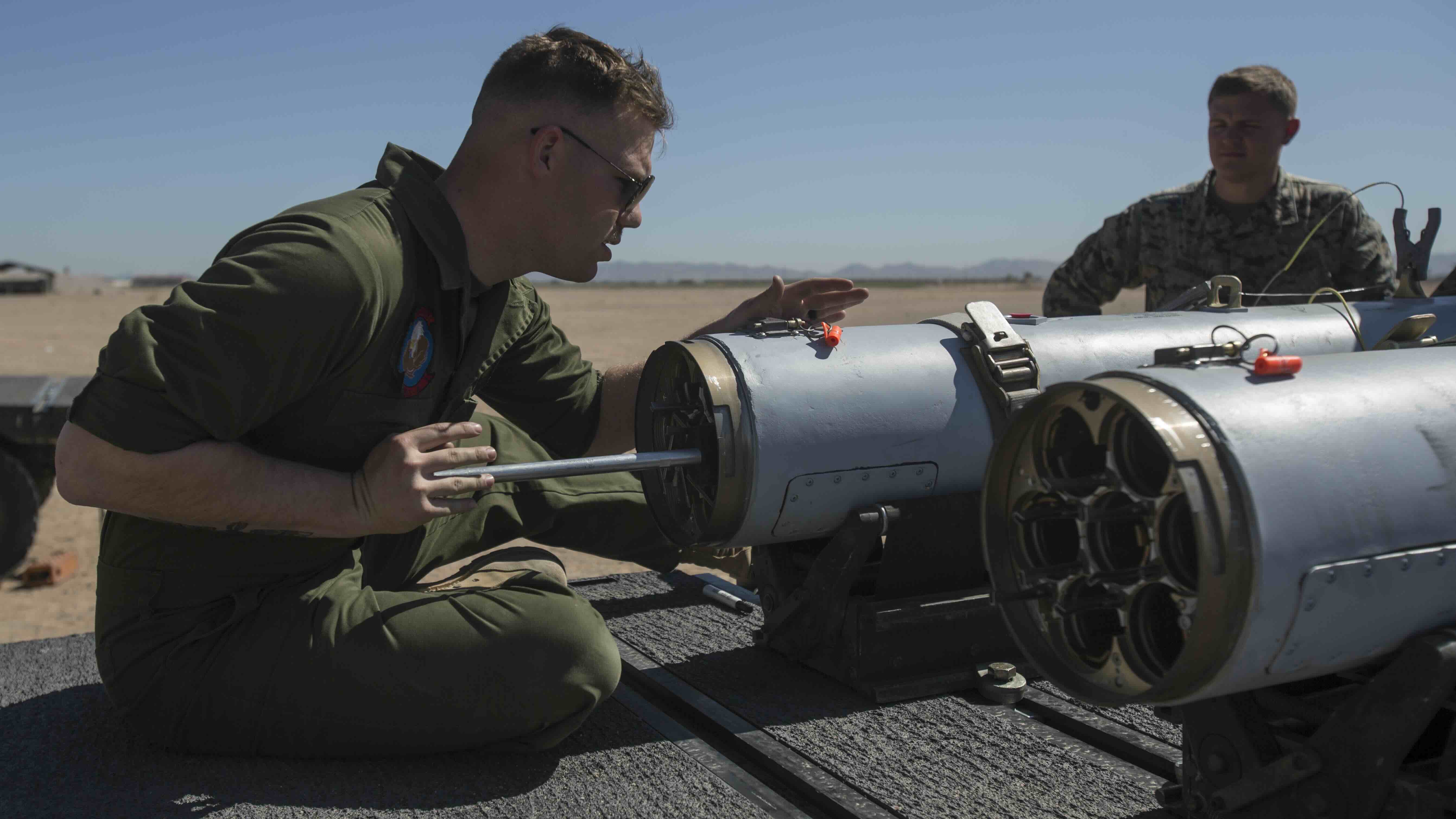
The notification, now before Congress for review, was announced on Wednesday. Saudi Arabia has requested 10,000 APKWS-II air-to-air guidance sections and 10,000 air-to-ground guidance sections, according to the State Department. The package also includes LAU-131 A/A launchers, Mk-152 high explosive warheads, and MK66 rocket motors.
The APKWS is a 70mm laser-guided rocket that converts standard unguided 2.75-inch aerial rockets into precision munitions. At roughly $10,000 to $20,000 per guidance kit, compared to more than $3 million for a Patriot PAC-3 interceptor missile, the system offers a cost-effective solution for defeating large volleys of one-way attack drones.
U.S. Air Force F-16 Vipers first used the air-to-air variant operationally against drone threats in the Middle East, a capability since extended to the F-15E Strike Eagle and A-10 Warthog.
BAE Systems received a $145 million USAF contract in February to further upgrade the APKWS with dual-mode seekers, enabling fire-and-forget capability against drone swarms.
The timing of the sale follows a rapidly deteriorating security picture on multiple fronts. The informal truce between Saudi Arabia and the Houthi rebel group, which has held in fragile form since 2022, is now described as “hanging by a thread” after both sides exchanged airport strikes this week.
Mohammed al-Bukhaiti, a member of the Houthi political bureau, threatened a “siege” on Saudi Arabia in response to the Sanaa strike, speaking to Al Jazeera. The exchange was sparked by a dispute over a Houthi delegation’s return flight from Tehran, where the group had attended the funeral of Iranian Supreme Leader Ali Khamenei.
The Saudi-backed Yemeni government had struck the airport to prevent an Iranian aircraft from landing in Houthi-controlled territory.
The State Department said the proposed sale “will support the foreign policy and national security objectives of the United States by improving the security of a Major non-NATO Ally that is a force for political stability and economic progress in the Gulf Region,” according to Al Jazeera.
The sale remains a congressional notification, not a finalized contract. Congress has 30 days to block or modify the deal, though legislative intervention in foreign military sales of this profile is rare.