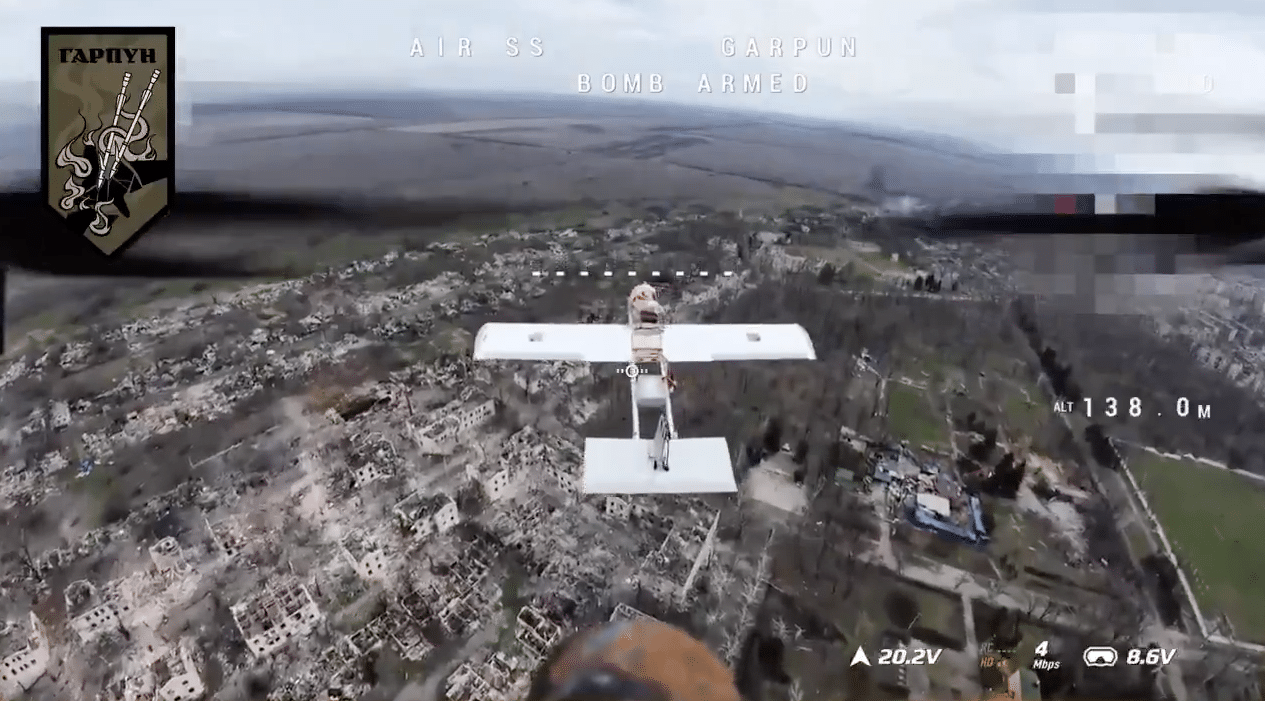
Russia has begun deploying an upgraded version of its low-cost Molniya strike drone in Ukraine that appears capable of conducting attacks with limited or no operator control.
According to Ukrainian military technology officials, the new autonomous variant was identified after a Russian Molniya drone struck a Ukrainian facility in Zaporizhzhia Oblast, southeastern Ukraine.
“This is what the autonomous version of the ‘Molniya’ with AI that I wrote about looks like,” a Ukrainian military technology expert and adviser to the defense minister known by his call sign “Flash,” wrote on Facebook, sharing a photo he said showed the upgraded drone. “The enemy has begun using them en masse in Zaporizhzhia.”
Russia fields fully autonomous Molniya strike drone — no radio link, invisible to jamming.
Russia deployed a fully autonomous variant of the Molniya (Lightning) strike drone with no radio control link at all, according to Ukrainian MoD advisor and electronic-warfare expert… pic.twitter.com/oMaAPZO2X2
— Clash Report (@clashreport) July 3, 2026
Beskrestnov said the Molniya drone is equipped only with a camera and onboard computer. “This is where everything is heading. Navigation, target acquisition and the attack will become fully autonomous,” he said.
Defence Blog notes that the absence of a control antenna, along with the presence of only a camera and onboard computer, suggests the drone may rely on onboard visual processing for navigation, target detection or terminal attack guidance.
“A Molniya with autonomous guidance can be launched toward Ukrainian positions, logistics routes, staging areas or command nodes without requiring continuous control across the full route. If the onboard computer can recognize the target area or lock onto a selected object during the final phase, Ukrainian jammers lose one of their simplest ways to stop the attack,” the news outlet further said.
A United24 Media report published in June described the Molniya as a low-cost Russian attack drone designed for mass deployment.
Built from inexpensive materials such as plywood, plastic, and cardboard, the small fixed-wing UAV has a wingspan of about 1.5 meters (4.9 feet), carries a 3–5 kg (6.6–11 lb) payload, and can travel up to 30–40 kilometers (18.6–24.9 miles) at speeds of up to 90 km/h (56 mph).
With an estimated cost of just $300–$400, the drone allows Russian forces to deploy it in large numbers against Ukrainian troops.
Official Ukrainian regional reports confirm a surge in Russian drone and missile attacks across Zaporizhzhia in recent days, but public summaries do not specify whether Molniya drones were involved.