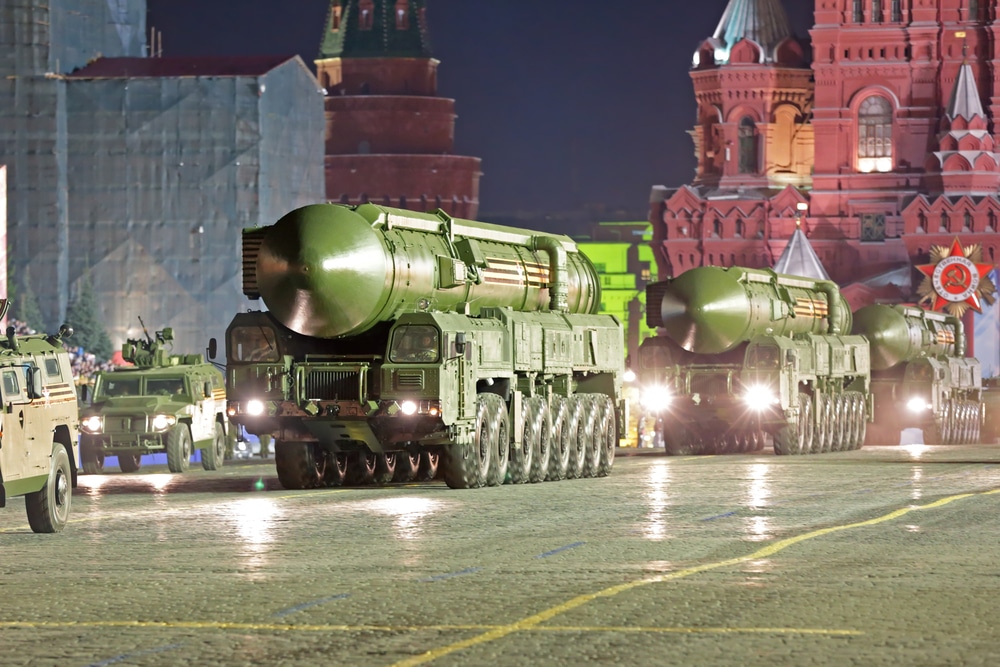
Russia announced Monday that it is ending its self-imposed ban on deploying ground-based short- and intermediate-range missiles.
In a statement, the Foreign Ministry said it no longer considers itself bound by the 1987 Intermediate‑Range Nuclear Forces (INF) Treaty, signed by Washington and Moscow, which banned land‑based missiles with ranges between 500 and 5,500 kilometers (310 to 3,420 miles).
The United States withdrew from the treaty in 2019 under President Donald Trump, citing alleged Russian violations involving the development and deployment of a banned missile system (the 9M729)—a claim Moscow denied.
Despite the treaty’s collapse, Russia had maintained a unilateral moratorium for nearly five years.
Moscow said its decision was prompted by the U.S. Army’s deployment of the Typhon system—capable of launching Tomahawk cruise missiles and SM‑6 interceptors—to NATO countries in Europe and U.S. allies in the Pacific.
“Taking into account the U.S. actions to deploy relevant missile systems in the Asia‑Pacific region and Europe, the moratorium is no longer relevant,” the ministry said. “We have to regard this as a direct threat to our national security.”
The ministry said: “Since 2023, there have been precedents of U.S. systems capable of launching INF-class missiles being transferred to NATO countries in Europe for testing in exercises with clear anti-Russian objectives.”
“In the Asia-Pacific, under the pretext of exercises in April 2024, a Typhon medium-range missile system was delivered to the Philippines, where it remains. A similar system was used in July 2025 in Australia during the multinational Talisman Sabre 2025 exercises,” it added.
The ministry also noted Germany’s plans to deploy Typhon and Dark Eagle systems starting 2026.
Russia’s announcement comes amid escalating tensions with Washington over the war in Ukraine.
Last month, Trump threatened new tariffs on Russian exports if a peace deal is not reached by August 8. Days later, he claimed that U.S. nuclear submarines had been repositioned closer to Russia amid growing fears of escalation.