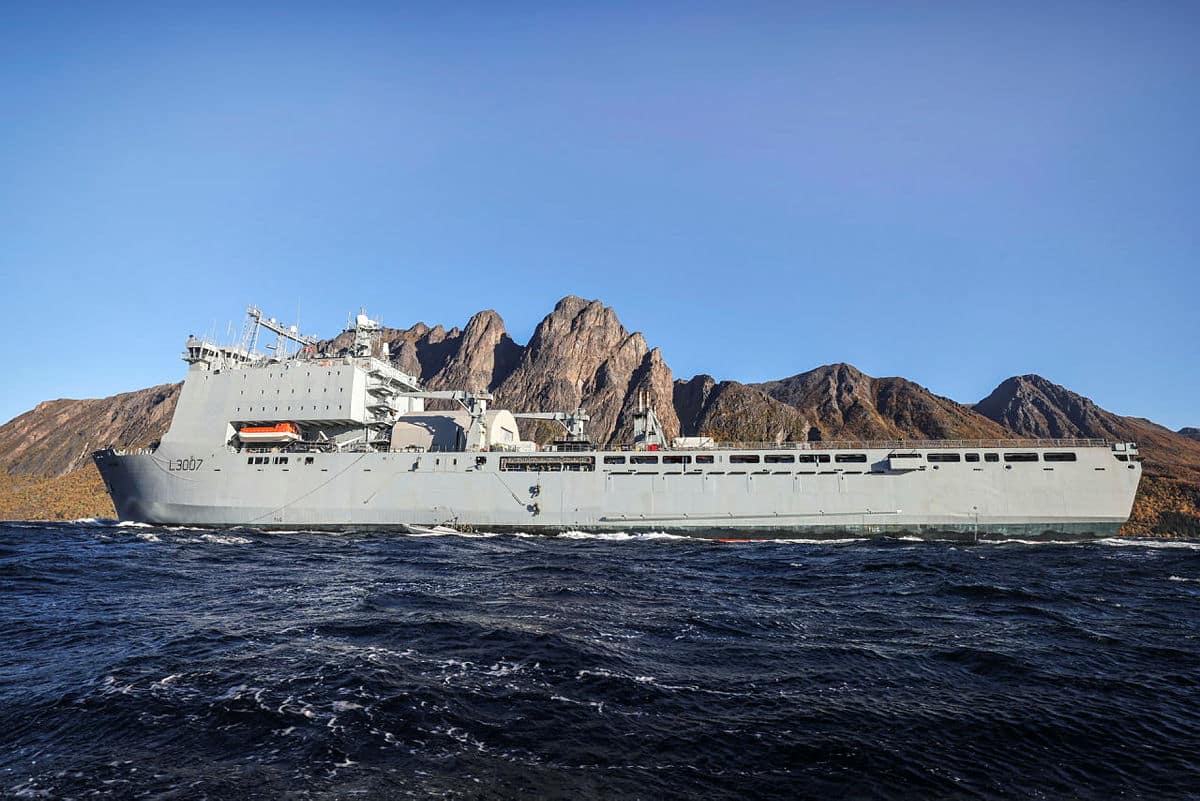
The Royal Navy is fitting RFA Lyme Bay with containerized, modular mine countermeasure (MCM) systems at Gibraltar, converting the Bay-class auxiliary into an autonomous mine-hunting mothership for a potential deployment to the Strait of Hormuz.
The #RoyalNavy is stepping up its minehunting capabilities as @RFALymeBay gets ready to take on new cutting-edge uncrewed equipment. The kit will be able to detect, identify and neutralise threats, with Lyme Bay acting as ‘mothership’.
➡️https://t.co/sIZ2IDC7HX pic.twitter.com/fjRfqmZ506
— Royal Navy (@RoyalNavy) March 29, 2026
The systems draw from the Royal Navy’s Maritime Mine Counter-Measures (MMCM) Block 1 inventory and include uncrewed surface vessels (USVs), remotely operated vehicles (ROVs), uncrewed underwater vehicles (UUVs), sonar systems, and portable control centres.
Several USVs are configured to tow electromagnetic coils designed to replicate a vessel’s acoustic or magnetic signature and detonate seabed mines at a safe distance.
“No decisions have yet been taken on whether these capabilities will be sent to the Strait of Hormuz,” a defence source said. “This preventative step gives ministers options should they be needed to help resume the normal flow of merchant shipping.”
The conversion follows the departure of HMS Middleton, the last Royal Navy minehunter based in Bahrain, which left the Gulf for maintenance in early 2026, shortly before the outbreak of war with Iran. The Royal Navy had maintained a continuous minehunting presence in Bahrain for years through that withdrawal.
Confirmation today that RFA Lyme Bay will embark MCM MAS in Gibraltar to support mine countermeasures role.
(Src: @RoyalNavy) https://t.co/sFrYeIjU8h
— UK Forces Tracker (@UKForcesTracker) March 29, 2026
First Sea Lord General Sir Gwyn Jenkins called the conversion “a perfect example of how we are building a hybrid navy, one where crewed ships and cutting-edge uncrewed systems work together seamlessly to keep our people safe and our seas secure.”
Commanding Officer Captain Mark Colley said his crew had been “put through our paces” and was ready to support the autonomous kit.
RFA Lyme Bay reactivated in early March after a maintenance period completed in December, deploying to the eastern Mediterranean where it has operated off Cyprus to support potential non-combatant evacuation operations. The ship will return to Gibraltar for the MCM refit before further tasking.
Around 20 million barrels of oil pass through the Strait of Hormuz daily. The waterway has been effectively disrupted since early March, pushing global oil prices and shipping costs higher.
US Central Command stated March 27 that USS Tripoli (LHA 7), an amphibious assault ship carrying thousands of expeditionary forces, had arrived in the CENTCOM area of responsibility, though US naval vessels have not transited the strait.