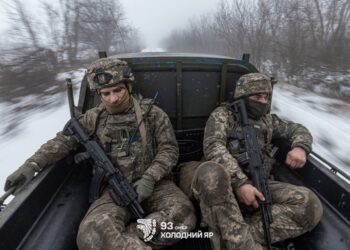
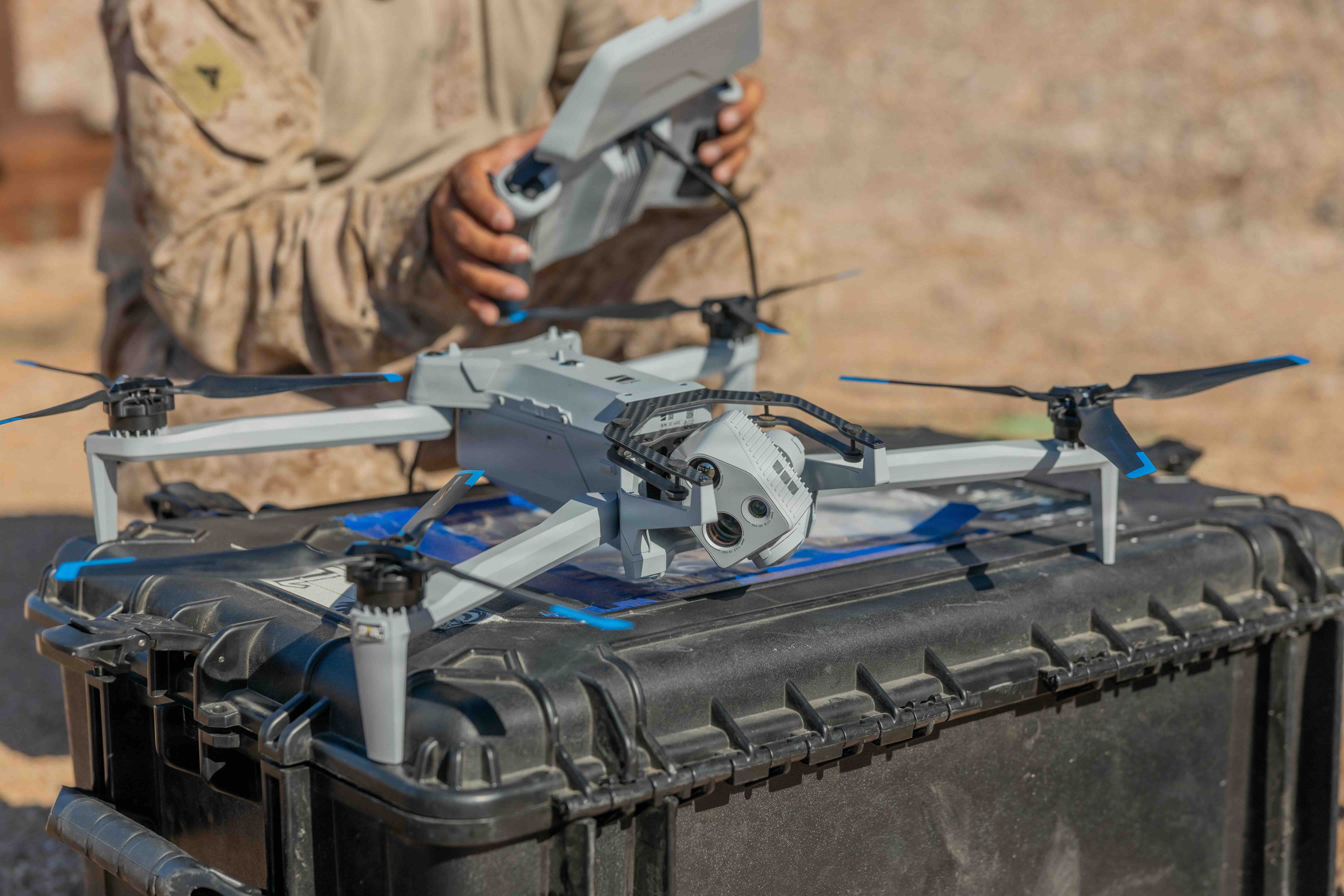
The commander of the U.S. Northern Command (NORTHCOM) said Tuesday that troops at the southern border lack portable counter-unmanned aerial system (C-UAS) coverage during patrols, even as the military uses the region as a testing ground for counter-drone technology.
Gen. Gregory Guillot, speaking at SOF Week in Tampa, Florida, said cartel drones fly over Marines and soldiers “all the time.” “We have a lot of fixed and movable counter-UAS capabilities, but not really anything that would follow a patrolling soldier, and that’s a concern of mine,” Guillot said.
The equipment shortfall is not new. Army Secretary Dan Driscoll called the Dronebuster, a handheld jammer produced by DZYNE Technologies, “terrible” and “a joke” during a January panel at Fort Drum. A soldier at the event told Driscoll his unit carried only the Dronebuster on the border. “I’m sure there’s better stuff out there. Why can’t we field it yet?” the soldier said.
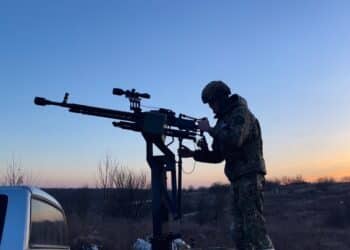
A Joint Task Force-Southern Border spokesperson said troops have since employed other portable systems, including the Wingman and Pitbull devices, as well as Smart Shooter, a rifle-mounted optic designed to track and engage small drones.
The FAA and Pentagon published a joint safety assessment in April clearing high-energy laser C-UAS technology for border use. It followed two airspace closures over El Paso, Texas, in February, triggered after the military operated laser-based counter-drone systems without sufficient FAA coordination.
Guillot described the border as a “literal and a figurative sandbox” for industry. “If you’re willing to bring it down to the southern border, we’ll put it to use. If it doesn’t, we’ll tell you exactly what you need to work on, so we can buy it potentially at scale,” he said. He added that NORTHCOM is drawing on lessons from U.S. Central Command.