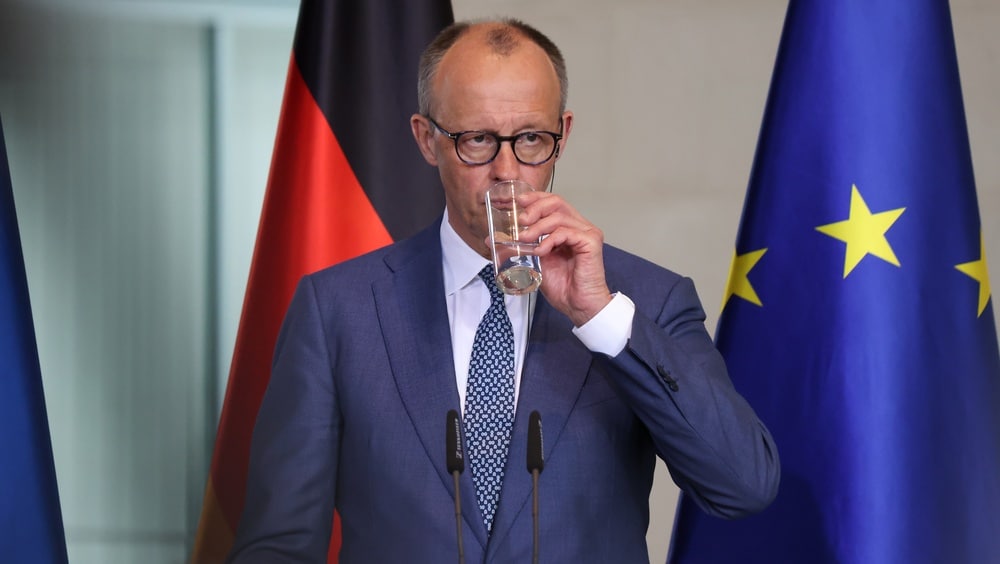
German Chancellor Friedrich Merz said Monday that Ukraine may have to permanently cede Russian-occupied territory in any future peace deal, linking that outcome to Kyiv’s prospects for European Union (EU) membership.
Merz spoke to students at the Carolus-Magnus-Gymnasium in Marsberg, North Rhine-Westphalia, Reuters reported. “At some point, hopefully, a peace treaty with Russia. Then it may be that part of Ukraine’s territory is no longer Ukrainian,” he said.
He said the settlement would require domestic legitimacy in Ukraine. “If President Zelenskyy wants to communicate this to his own population and gain a majority for it, and he needs to hold a referendum on it, then he must at the same time tell the people: ‘I have opened the way to Europe for you,'” Merz said.
The framing departs from the EU’s merit-based enlargement model. European Commission President Ursula von der Leyen said in Cyprus last week that accession “is a two-way contract. It’s hard reforms that the candidate countries have to do.”
Merz dismissed near-term membership timelines. “Zelenskyy had the idea of joining the EU on January 1, 2027. That will not work. Even January 1, 2028 is not realistic,” he said, proposing observer status in EU institutions as an interim step.
Zelenskyy rejected partial arrangements at the Cyprus summit. “We seek the same full membership that every EU nation has, from Cyprus to Poland,” he said.
Ukraine always expresses its gratitude and always remembers clearly who supported us and how after this war began. But it is equally important, especially for Europe, that all partners remember that Ukraine is defending not only itself in this war. Russia wants our territory so… pic.twitter.com/Z6CzerAjSx
— Volodymyr Zelenskyy / Володимир Зеленський (@ZelenskyyUa) April 27, 2026
Russia controls roughly 20% of Ukrainian territory and has demanded Kyiv surrender the remaining occupied areas of Donetsk Oblast before any ceasefire. Ukraine has rejected those terms.
Those developments follow the electoral defeat of Hungarian Prime Minister Viktor Orbán earlier this month, ending nearly two years of vetoes on Ukraine’s EU accession talks.
The EU also cleared a €90 billion loan to Ukraine last week.