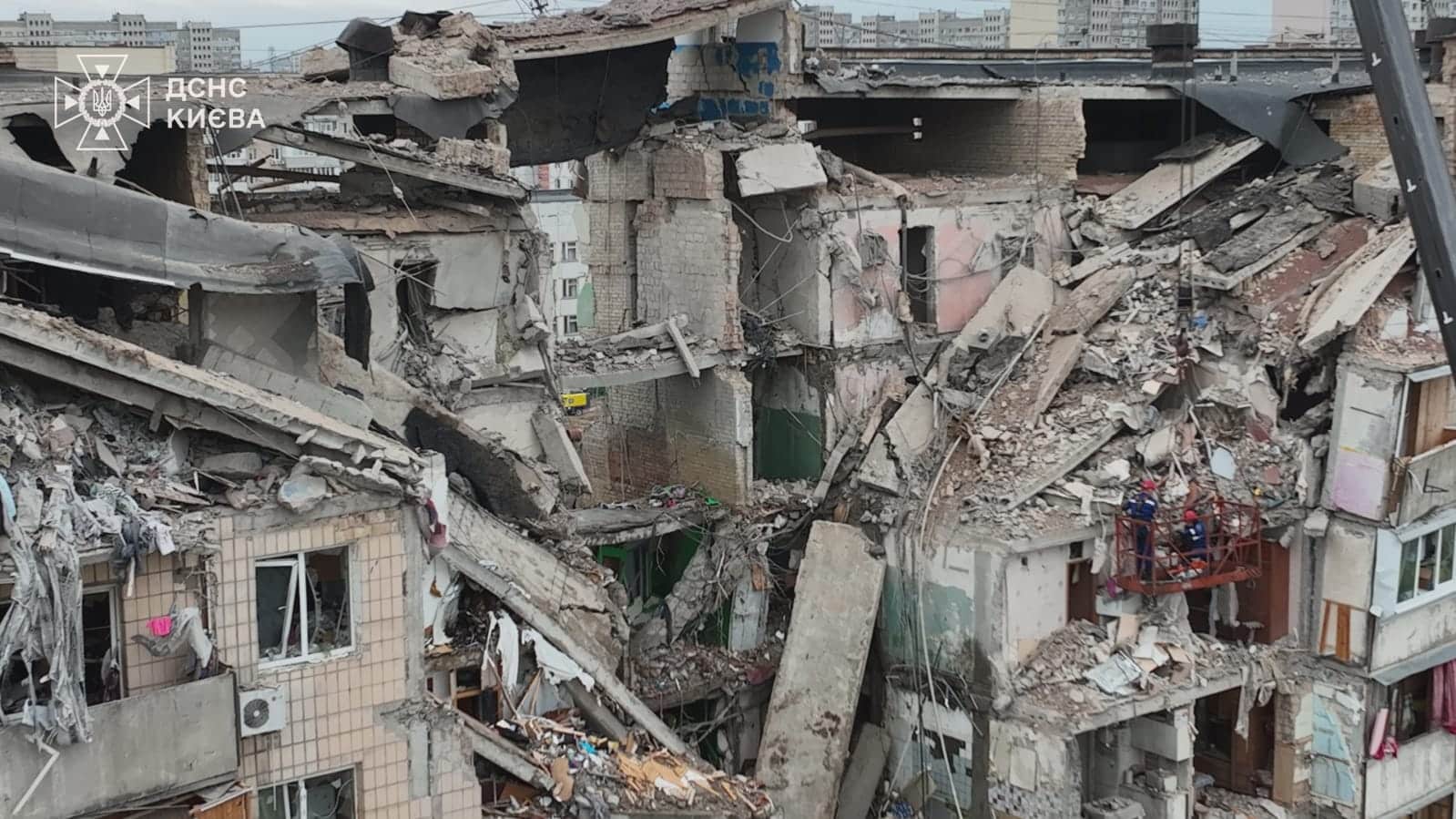
Ukraine’s air defenses intercepted none of the ballistic missiles in a Russian strike on Kyiv overnight July 5-6, killing at least 22 people, as NATO allies gathered in Ankara for a summit where President Volodymyr Zelenskyy was set to press for more interceptors.
Last night, Kyiv came under a massive Russian attack. Russia launched 68 missiles and 351 attack drones. Response efforts are still underway. Damage has been recorded at more than 10 locations across the city, including residential buildings. All necessary services are on the… pic.twitter.com/101XvDDYs1
— Volodymyr Zelenskyy / Володимир Зеленський (@ZelenskyyUa) July 6, 2026
The Ukrainian Air Force confirmed zero of 23 Iskander ballistic missiles and zero of six Zircon and Onyx hypersonic missiles were shot down, though defenders downed 326 of 351 drones, 31 of 33 Kh-101 cruise missiles, and all six Kalibr cruise missiles.
“To shoot down ballistic missiles, you need the assets to do so. We have enough Patriot systems, but what we need is a steady supply of missiles,” Air Force spokesman Col. Yurii Ihnat said on national television.
❗️“To shoot down ballistic missiles, you need something to shoot them down with. Patriot systems are sufficient — what’s needed is a constant supply of missiles. We have a certain… serious shortage of interceptor missiles,” — Ukrainian Air Force spokesman Ignat on today’s… pic.twitter.com/1POwwNCi58
— 🪖MilitaryNewsUA🇺🇦 (@front_ukrainian) July 6, 2026
Defense Minister Mykhailo Fedorov said Russian forces are deliberately scaling up ballistic weapon use, “launching them at a scale not previously seen while exploiting the critical shortage of interceptor missiles for Patriot air defense systems.”
Ukraine has signed contracts for Patriot Advanced Capability-3 (PAC-3) interceptors, Fedorov said, with deliveries not scheduled to arrive until 2027.
Germany’s $200 million commitment to the JUMPSTART mechanism, a multinational program for procuring Patriot interceptors for Ukraine, buys roughly 40 to 50 PAC-3 Missile Segment Enhancement (MSE) rounds at approximately $4 million each.
Air defense doctrine calls for two interceptors per incoming ballistic target, meaning Germany’s entire pledge covers roughly 20 to 25 missiles. Russia launched 29 ballistic and hypersonic missiles during the July 6 strike alone.
NATO Secretary General Mark Rutte told reporters in Ankara that “there is a limit to the amount of interceptors that are in NATO territory” but confirmed the U.S. continues delivering to Ukraine.
Monday’s attack was Kyiv’s second in four days. A July 3 strike killed 31 people in Kyiv, the deadliest single attack of the year.