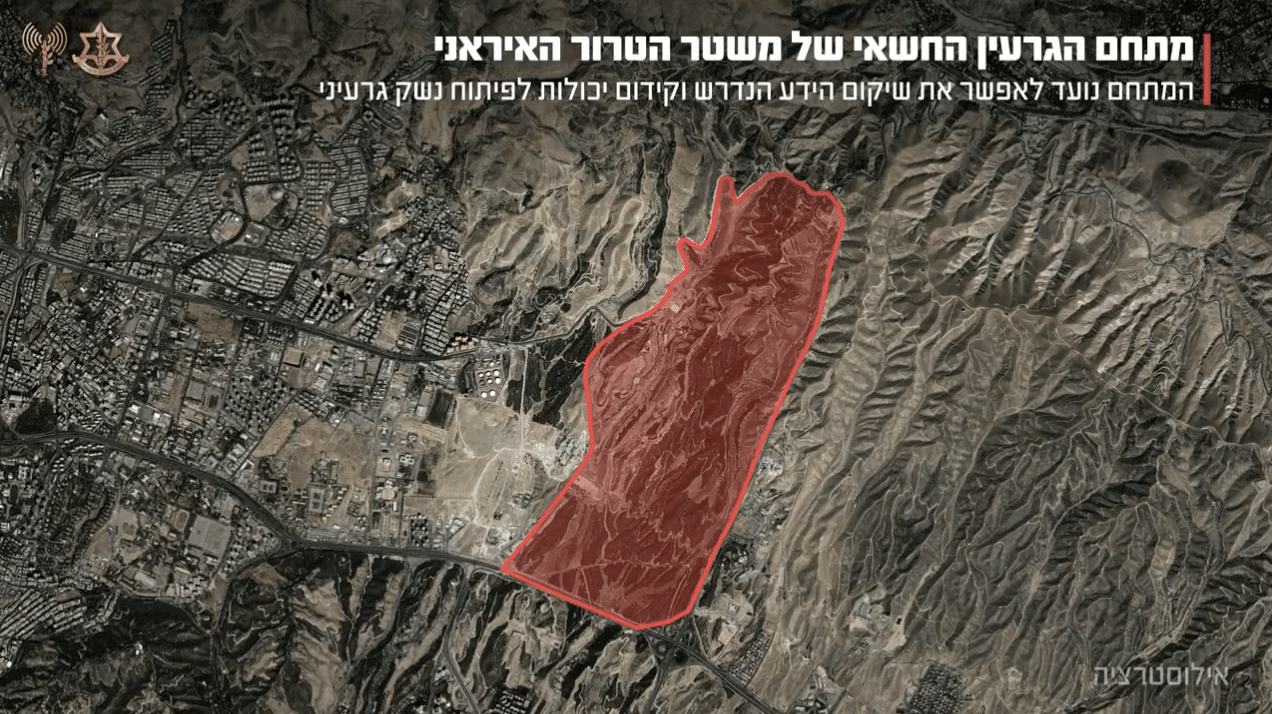
Israeli fighter jets struck a concealed underground nuclear facility on Tehran’s northeastern outskirts on Tuesday, targeting what the military characterized as a central node in Iran’s weapons development program.
In a report by The Times of Israel, IDF Chief Spokesman Brig. Gen. Effie Defrin identified the target as “Minzadehei,” a partially subterranean compound operating under Iran’s Defense Ministry. A team of nuclear scientists had been working at the site to advance key weapons-related capabilities, according to the IDF.
🎯 NUCLEAR WEAPONS DEVELOPMENT SITE STRUCK
The covert ‘Minzadehei’ compound was used by a group of nuclear scientists who operated to develop a key component for nuclear weapons.
Using intelligence, the IDF tracked the activities at this new location, removing a key component… pic.twitter.com/xwXQud49gN
— Israel Defense Forces (@IDF) March 3, 2026
Israeli Military Intelligence tracked the scientists’ movements after the June 2025 conflict, a 12-day campaign that struck dozens of Iranian weapons development facilities. According to a report published by The Jerusalem Post, Defrin revealed that Tehran subsequently relocated portions of its nuclear infrastructure to hardened underground sites designed to resist aerial bombardment.
The regime continued pursuing weapons-related capabilities despite that earlier damage, the IDF stated. By monitoring the scientists’ clandestine travel patterns, Israeli intelligence pinpointed the new operational hub and executed a precision strike on the facility.
The IDF has not released a battle damage assessment. Iranian officials have not publicly commented on the strike.
Campaign Scope
In addition, the IDF confirmed it has taken out approximately 300 Iranian missile launchers since the start of the present campaign. According to CTech, Israeli pilots have flown approximately 1,600 strike sorties and delivered an estimated 4,000 munitions against Iranian targets, surpassing the total ordnance expended during the June 2025 war.
The Critical Threats Project reported that combined U.S.-Israeli forces struck the Natanz nuclear facility on March 2, the first confirmed hit on an Iranian nuclear site since the campaign launched on February 28. Satellite imagery analyzed by the project showed at least three buildings severely damaged. The IAEA confirmed damage to entrance buildings at the underground enrichment plant but said no radiological consequences are expected.