High-level US-Iran negotiations at the Bürgenstock resort in Obbuergen, Switzerland, concluded early Monday with lower-level technical talks set to continue through the week, but a unilateral Strait of Hormuz closure declaration by Iran’s Islamic Revolutionary Guard Corps (IRGC) over the weekend signaled that the diplomatic track and IRGC operational command remain out of sync.
The U.S. Treasury Department issued a 60-day general license Monday authorizing the production, delivery, and sale of Iranian oil through August 21. Treasury Secretary Scott Bessent, in a post on X, said Iran had committed to free and open transit through the Strait of Hormuz and to permitting International Atomic Energy Agency (IAEA) inspectors into the country as conditions of the authorization.
U.S. Vice President JD Vance, who led the American delegation alongside envoys Steve Witkoff and Jared Kushner, said the 18-hour talks had “laid a very good foundation for a successful final deal.”
The President has been clear from day one: Iran will never have a nuclear weapon.
Once again, President Trump’s efforts to establish peace have paid off for the American people, despite countless attempts to thwart it by people who hate America and President Trump. pic.twitter.com/w9SWDRCOsZ
— JD Vance (@JDVance) June 15, 2026
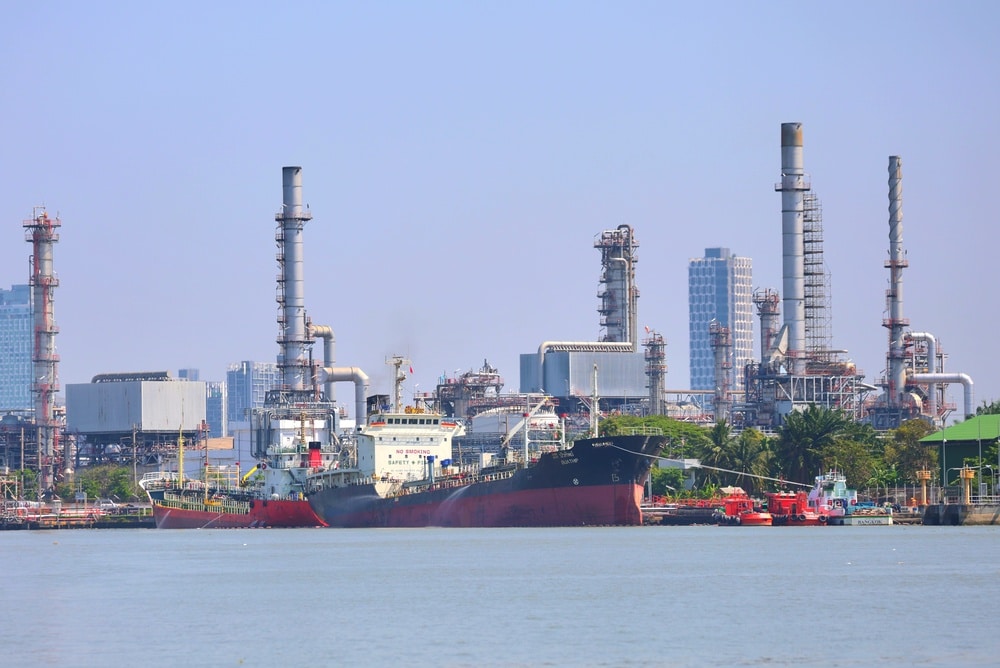
The IRGC declared the strait closed Saturday, citing Israeli strikes in Lebanon, and U.S. Central Command disputed the announcement, saying traffic had continued. Vessel transit data from Kpler showed tracked crossings fell from 35 Saturday to 17 Sunday as multiple ships disabled their transponders, before recovering Monday.
Before the war began February 28, more than 100 vessels transited Hormuz daily, carrying roughly 20% of global crude supplies. Iranian crude loadings had fallen to 260,000 barrels per day in May under the U.S. naval blockade, down from 1.5 million barrels per day before the conflict.
Mediators Pakistan and Qatar announced the creation of a de-confliction cell to address ongoing fighting in Lebanon, stating the mechanism would include the Lebanese government and would “ensure the adherence of the termination of military operations in Lebanon.”
Iran’s Foreign Minister Abbas Araghchi said on X that Pakistani and Qatari mediation had delivered “major progress to end Lebanon War,” calling the de-confliction cell’s performance the first “test” of the negotiations.
Tireless Pakistani and Qatari mediation has delivered major progress to end Lebanon War. Oil and petrochem exports are waived, blockade lifted, some frozen assets released, and major reconstruction & development plan launched for Iran.
1st real test: Lebanon deconfliction cell https://t.co/q0okD2qwSO
— Seyed Abbas Araghchi (@araghchi) June 22, 2026
Iran’s Parliamentary Speaker Mohammad Bagher Qalibaf, who co-led the Iranian delegation with Araghchi, had responded sharply on X to threats from President Donald Trump, who posted on social media that Iran must stop its “highly paid PROXIES in Lebanon from causing trouble” or face renewed strikes. “They may keep talking, it is we who act,” Qalibaf wrote.
U.S. Central Command has not confirmed the IRGC declaration has been rescinded, and negotiators have yet to establish a binding mechanism that would prevent the IRGC from issuing further unilateral closure orders during the 60-day technical phase.