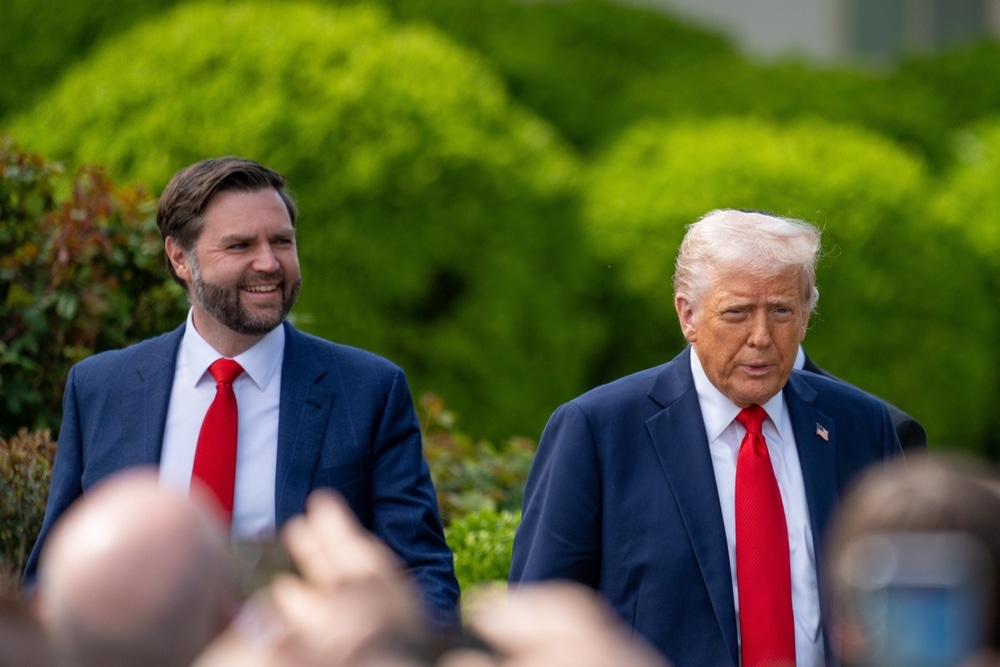
A second round of direct U.S.-Iran peace negotiations could resume in Islamabad as early as this week, officials from both countries said Tuesday. Iran has told Pakistani mediators it will only return to the table if Vice President JD Vance personally leads the American delegation, rejecting special envoy Steve Witkoff and presidential adviser Jared Kushner as interlocutors, a Pakistani official told The Guardian.
Tehran does not trust either man following exchanges that preceded the February U.S.-Israeli military campaign against Iran, the official said.
President Donald Trump said Tuesday he expected movement “over the next two days” and called Pakistani army chief Field Marshal Asim Munir “fantastic,” signaling a preference for Islamabad as the venue.
A White House official confirmed to CNBC that a second round was under discussion but that nothing had been formally scheduled. “The ball is in their court,” Vance told Fox News on Monday.
The first round ended after 21 hours without agreement. Washington sought a 20-year suspension of uranium enrichment and the full physical removal of Iran’s highly enriched uranium (HEU) stockpile.
Tehran offered a three-to-five-year moratorium and proposed “down-blending” its HEU rather than removing it, a process that mixes weapons-grade material with lower-purity uranium to reduce its potency.
The International Atomic Energy Agency (IAEA) estimates Iran holds nearly 1,000 pounds of HEU.
Iranian Foreign Minister Abbas Araghchi wrote on X that the U.S. delegation brought “maximalism, shifting goalposts, and blockade” to the table.
In intensive talks at highest level in 47 years, Iran engaged with U.S in good faith to end war.
But when just inches away from “Islamabad MoU”, we encountered maximalism, shifting goalposts, and blockade.
Zero lessons earned
Good will begets good will.
Enmity begets enmity.— Seyed Abbas Araghchi (@araghchi) April 12, 2026
Trump ordered a naval blockade of Iranian ports after the talks collapsed.
U.S. Central Command (CENTCOM) reported Tuesday that more than 10,000 sailors, Marines, and airmen, backed by over a dozen warships, are enforcing it.
More than 10,000 U.S. Sailors, Marines, and Airmen along with over a dozen warships and dozens of aircraft are executing the mission to blockade ships entering and departing Iranian ports. During the first 24 hours, no ships made it past the U.S. blockade and 6 merchant vessels… pic.twitter.com/dpWAAknzQp
— U.S. Central Command (@CENTCOM) April 14, 2026
No vessels breached the cordon in the first 24 hours and six merchant ships complied with orders to turn back, CENTCOM said.
Oil briefly surpassed $100 per barrel before retreating to approximately $95 on Tuesday after reports of possible resumed talks emerged.
The ceasefire expires April 21.