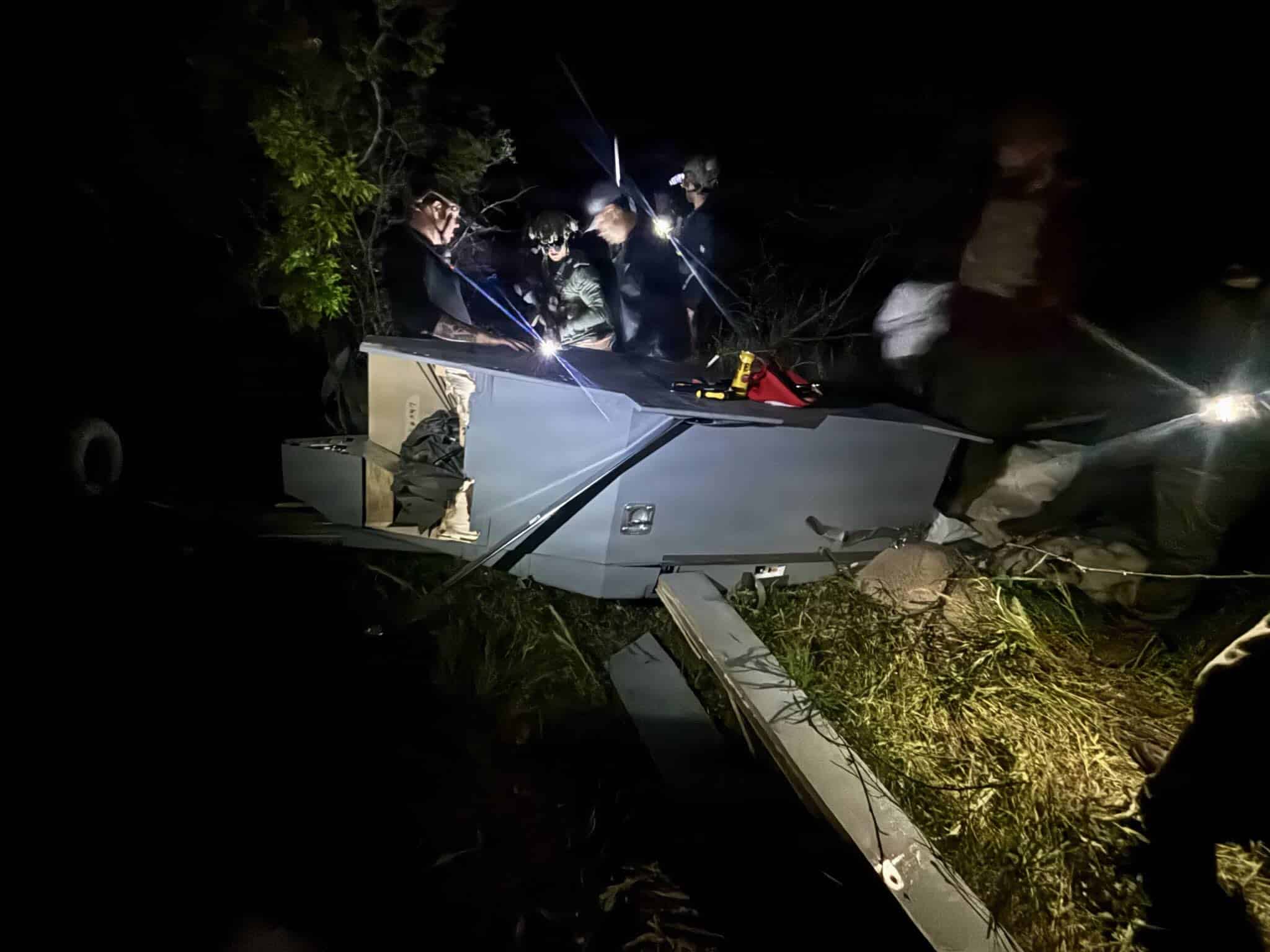
DZYNE Technologies’ turboprop-powered Long-Range Grasshopper (LRGH), an autonomous resupply glider, completed its first operational cargo drop in the U.S. European Command (EUCOM) theater in mid-May, resupplying U.S. Army Green Berets in North Macedonia during Exercise Trojan Footprint 2026.
Romanian Air Force aircrew aboard an Alenia C-27J released the LRGH over a drop zone near Krivolak, North Macedonia, loaded with construction materials, food, and medical supplies.
A 🇷🇴 Romanian Air Force Alenia C-27J Spartan aircraft drops a Long Range Grasshopper (LRGH) system during a demonstration at Trojan Footprint 2026 near Cincu, Romania, on 15 May 2026. This marked the first time the LRGH system had been used in the U.S. European Command theatre. pic.twitter.com/7DK9O7t8vm
— Ovidiu Muca 🇪🇺 (@OvidiuMuca) May 21, 2026
DZYNE confirmed the milestone on LinkedIn, noting coordination with the U.S. Special Operations Command Europe (SOCEUR) and Romanian aircrew, loadmasters, and drop zone personnel throughout the demonstration.
A Grasshopper autonomous resupply drone demonstrated long-range, low-cost precision airdrops from a 🇷🇴Romanian C-27 during Trojan Footprint 26 in Krivolak-North Macedonia, boosting Allied deterrence and regional security through joint cooperation. pic.twitter.com/jhI2xQaZc8
— Ovidiu Muca 🇪🇺 (@OvidiuMuca) May 21, 2026
Trojan Footprint 2026 ran May 10 to 22 across Romania and North Macedonia, bringing together approximately 1,000 U.S. special operations forces and 2,000 commandos from 23 NATO allied and partner nations. SOCEUR described the exercise as a “dynamic testing ground for refining tactics, testing cutting-edge technology, and developing innovative operational concepts.”
The LRGH adds a turboprop that extends range to hundreds of miles, approximately 10 times the standard Grasshopper’s unpowered range, according to DZYNE. Both variants carry up to 500 pounds of cargo, navigate autonomously in GPS-denied environments, and deploy a parachute for a controlled landing within 10 meters of the target. DZYNE prices each unit at approximately $40,000 per vehicle.
A SOCEUR logistics official told Business Insider at SOF Week in Tampa, Florida, that glider drones are drawing interest for their ability to resupply forward positions without generating the electronic emissions that betray troop locations.
The Air Force Research Laboratory (AFRL) and DZYNE unveiled the standard Grasshopper on May 2, 2025, confirming the delivery of “several dozen” units to the Air Force.
The platform transitioned from a research concept to a fielded capability in under 12 months. Reflecting on its deployment, AFRL portfolio lead Dr. Thomas Howell noted that Grasshopper enables “resupply from standoff ranges without exposing aircrews or manned platforms to adversary threat envelopes.”