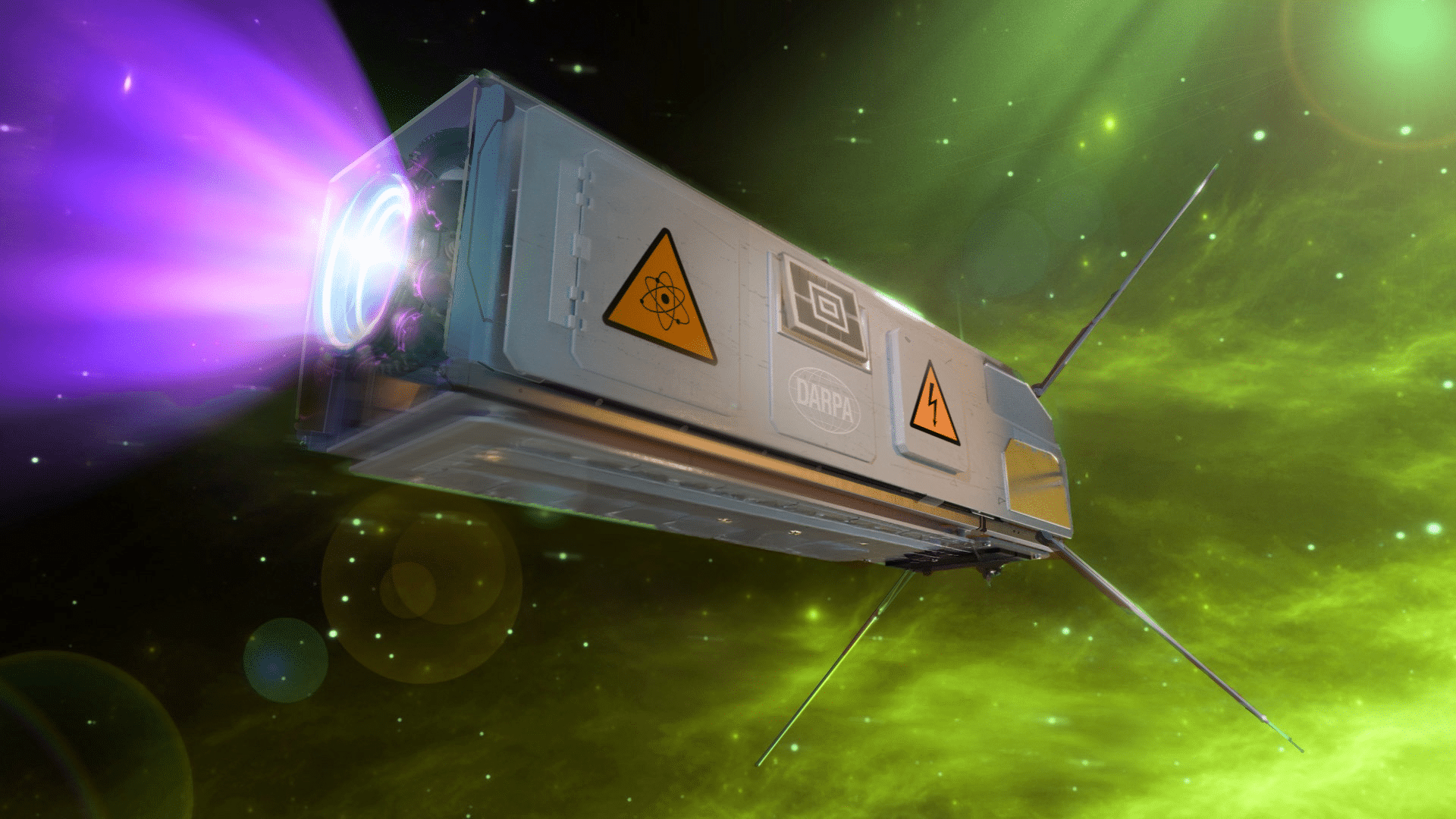
The Defense Advanced Research Projects Agency (DARPA) awarded a $3.37 million contract on June 16, 2026, to a team led by Morgan State University to develop nuclear waste-powered batteries capable of generating continuous electricity for up to 30 years, targeting military drones, satellites, and autonomous underwater systems.
The Morgan State University Department of Electrical and Computer Engineering (ECE) has received its first award from the Defense Advanced Research Projects Agency (DARPA), a $2.4-million grant to lead a research project focused on converting nuclear radiation into electrical… pic.twitter.com/T2UzMSwdVz
— Morgan State University (@MorganStateU) April 6, 2026
While the initial university-specific grant was announced at $2.4 million, the finalized total contract value for the entire research coalition is $3.37 million.
The contract supports SYMPHONEE, shorthand for Strontium-Yttrium Multi-junction PIN-based High-Density Output Nano-system for Extreme Environments, under DARPA’s “Rads to Watts” program. The project aims to build radiovoltaic devices that convert nuclear radiation directly into electricity rather than storing energy chemically, with a power density target exceeding 10 watts per kilogram.
Project Omega will build the nuclear power generator using Strontium-90, an isotope extracted from existing nuclear waste. “Solar cells directly convert sunlight into electricity. Ours directly convert radiation into electricity,” Stafford Sheehan, the company’s CEO and founder, said. “We already have some of these small devices running.”
“Nuclear waste” is the term everyone uses for the spent fuel rods that come out of nuclear reactors.
The term is on the news and in the legislation, but it’s completely misleading.
What comes out of the nuclear power process is used nuclear fuel.
Not “waste”. Used fuel with… pic.twitter.com/nMdPuuIRqN
— Project Omega (@ProjectOmegaHQ) June 30, 2026
Sheehan said more than 100,000 metric tons of nuclear waste sit across 52 reactor sites nationwide, and that the federal government faces billions of dollars in annual litigation over unresolved waste disposal.
Morgan State serves as prime contractor, handling basic research, with Pacific Northwest National Laboratory (PNNL) managing nuclear materials and testing, Northrop Grumman and Applied Research Associates (ARA) contributing computational modeling, and Widetronix designing the semiconductor power converter. A working prototype is targeted for early 2027 at PNNL.
The award makes Morgan State the first historically Black college or university (HBCU) to lead a DARPA defense program.
A PNNL official wrote in a statement that the next 18 months will focus on reducing technical risk and validating performance under realistic conditions. “Key challenges include improving energy conversion efficiency, validating long-term reliability, managing radiation effects, and ensuring safe, secure handling and deployment,” the official stated.