
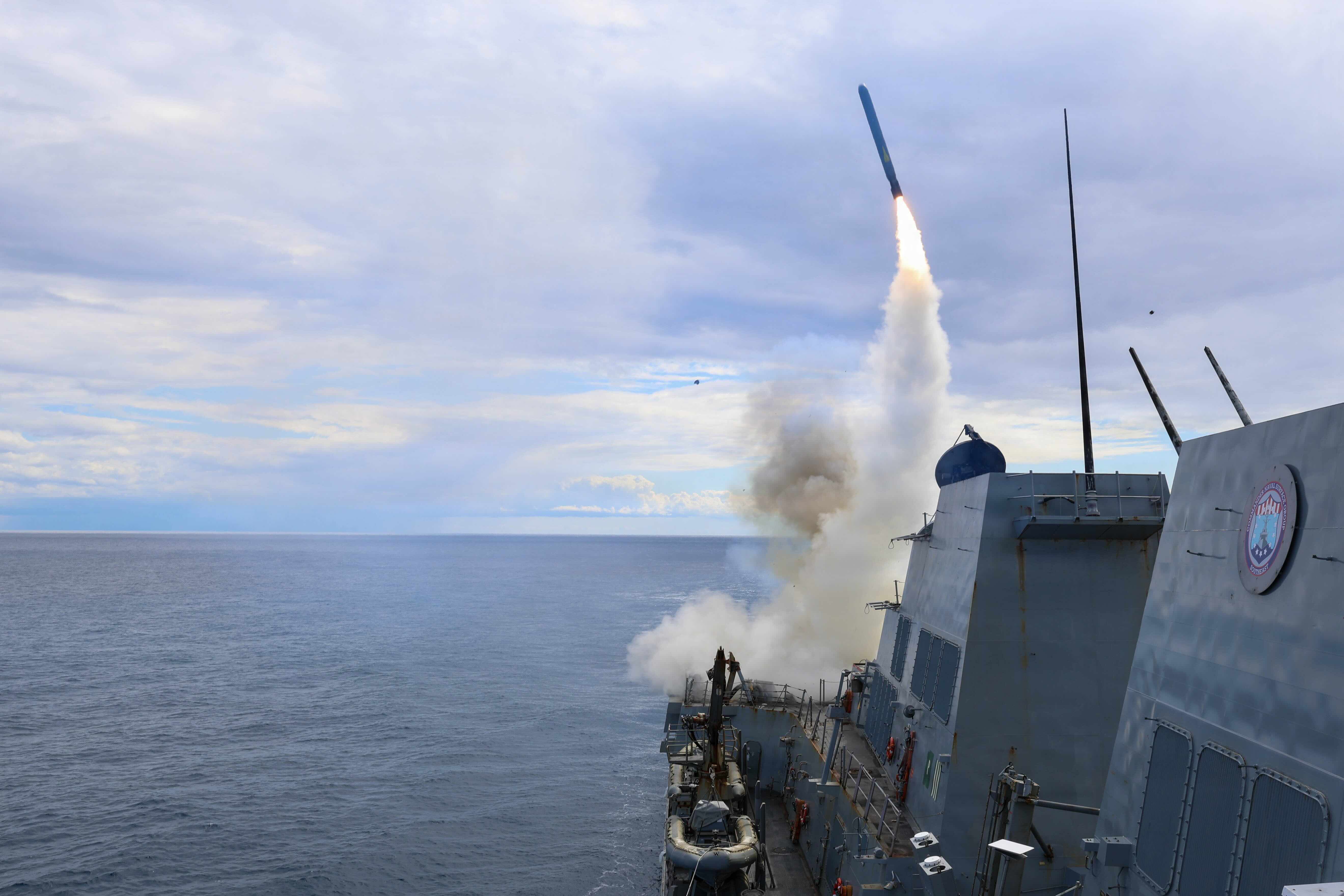
The United States will need at least three years to rebuild stockpiles of key advanced weapons systems depleted during the Iran conflict, according to a new analysis by the Center for Strategic and International Studies (CSIS).
The report found that sustained reliance on American precision weapons in the Iran war significantly reduced inventories of long-range strike and air defense systems, including Tomahawk Land Attack Missiles, Terminal High Altitude Area Defense missile systems, and Patriot air defense interceptor missiles.
While the think tank notes that current U.S. stockpiles remain sufficient to conclude the conflict in Iran, the significant drawdowns are creating a potential gap in deterrence elsewhere.
Defense planners are particularly concerned that the shortfall could limit U.S. firepower in the event of a Western Pacific crisis, including a potential conflict with China over Taiwan.
Earlier U.S. intelligence reports indicate that Chinese President Xi Jinping has directed the People’s Liberation Army to be ready for a possible invasion of Taiwan by 2027.
Despite the Trump administration’s proposed $1.5 trillion defense budget for 2027, which includes funds for munitions procurement, the report said this would not be sufficient and that additional funding is needed to restore stockpiles to prewar levels.
The report also notes that reaching prewar stockpile levels could be difficult because, in addition to producing weapons for the U.S. military, Washington must also meet demand from allies. Ukraine continues to require Patriot missiles for defense against Russia, and 17 other countries also operate the interceptor.
“It takes time to expand production capacity and to build these complex systems,” the report noted.
The CSIS projects that the “window of vulnerability” will persist “for several years until inventories return to their previous levels and another several years before they get to the levels that war planners desire.”
“The DOD will need to make plans for dealing with this gap. Some munitions could be substituted, but these carry tradeoffs. Alternative ground attack munitions, for example, are short- or medium-range and increase vulnerability of the launch platforms. Alternative counter-drone systems are expensive,” the report added.
War Secretary Pete Hegseth has not publicly commented on the report’s findings.









Why is this information being published in a public forum? In my position if I was to publish this kind of information I would have my clearance revoked! This gives our enemies planning data.