The USS Abraham Lincoln and its escort ships have entered the United States Central Command (CENTCOM) area of responsibility amid rising tensions with Iran.
In a post on X on Monday, CENTCOM said the fifth Nimitz-class aircraft carrier “is currently deployed to the Middle East to promote regional security and stability.”
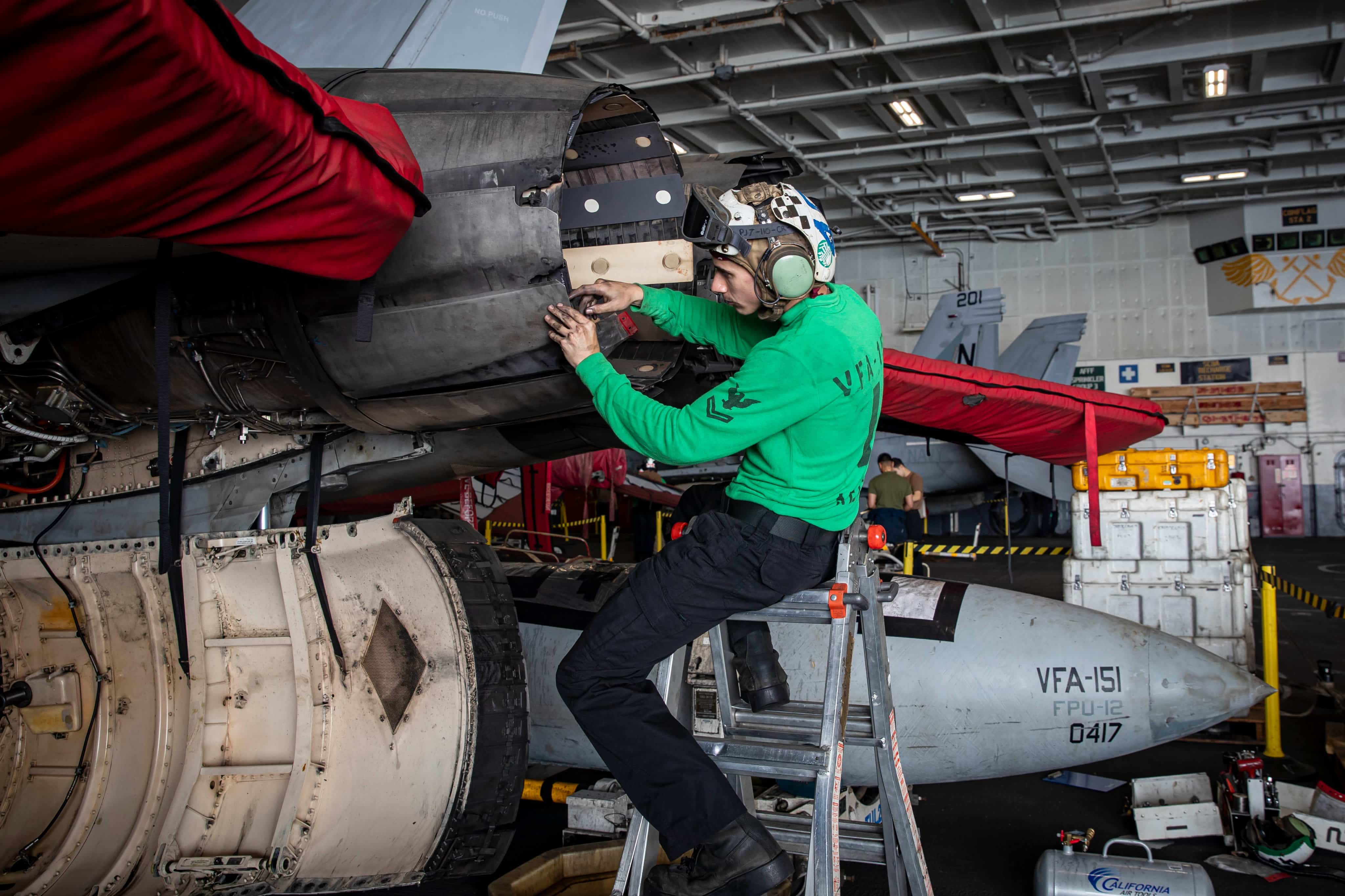
Sailors aboard USS Abraham Lincoln (CVN 72) perform routine maintenance as the aircraft carrier sails in the Indian Ocean, Jan. 26. The Abraham Lincoln Carrier Strike Group is currently deployed to the Middle East to promote regional security and stability. pic.twitter.com/dkuN946hce
— U.S. Central Command (@CENTCOM) January 26, 2026
Since early this month, the U.S. has been deploying military assets, including fighter jets and warships, to the region in the wake of deadly protests in Iran.
The arrival of these assets comes after President Donald Trump threatened to intervene if Iran continued killing protesters. While the demonstrations, which began in December, have since abated, he has repeatedly said that an attack on Iran is not off the table.
It remains unclear what the U.S. will do next, but observers say the Iranian government is now preparing for a potential U.S. and Israeli missile strike.
On Monday, President Donald Trump told Axios that the Iran situation is “in flux” after he ordered the deployment of a “big armada” to the region. Trump said that Iran reached out to the U.S. repeatedly to propose talks on a potential deal.
U.S. officials, also cited by Axios, stated that any potential deal would obligate Iran to eliminate all enriched uranium, cap its long-range missile arsenal, change its backing of regional proxy groups, and stop independent uranium enrichment, requirements that Iranian leaders have so far rejected.
Iran’s foreign ministry spokesperson, Esmail Baghaei, on Monday denied reports that U.S. special envoy Steve Witkoff had been in contact with Foreign Minister Abbas Araghchi to discuss a possible deal.
Baghaei also said Iran was “carefully monitoring every movement.” He warned that military threats “goes against the principles of the international system” and that “if these principles are violated, insecurity will befall everyone.”
“We will give a comprehensive and regrettable response to any aggression,” Baghaei added.
Estimates of the death toll in Iran continue to vary widely, but the U.S.-based group Human Rights Activists News Agency reported that 6,126 protesters have died as of Monday. The group is still investigating an additional 17,000 potential fatalities.
Day 30 of Iran’s protests: 6,126 confirmed deaths, 41,880 arrests, 11,009 severely injured, 245 forced confessions, 651 protests in 200 cities. The number of deaths still under investigation stands at 17,091. Internet shutdowns persist as injured protesters face detention.
More… pic.twitter.com/edYNBQuEi1— HRANA English (@HRANA_English) January 26, 2026