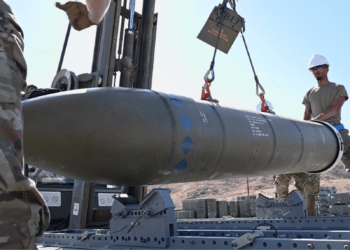
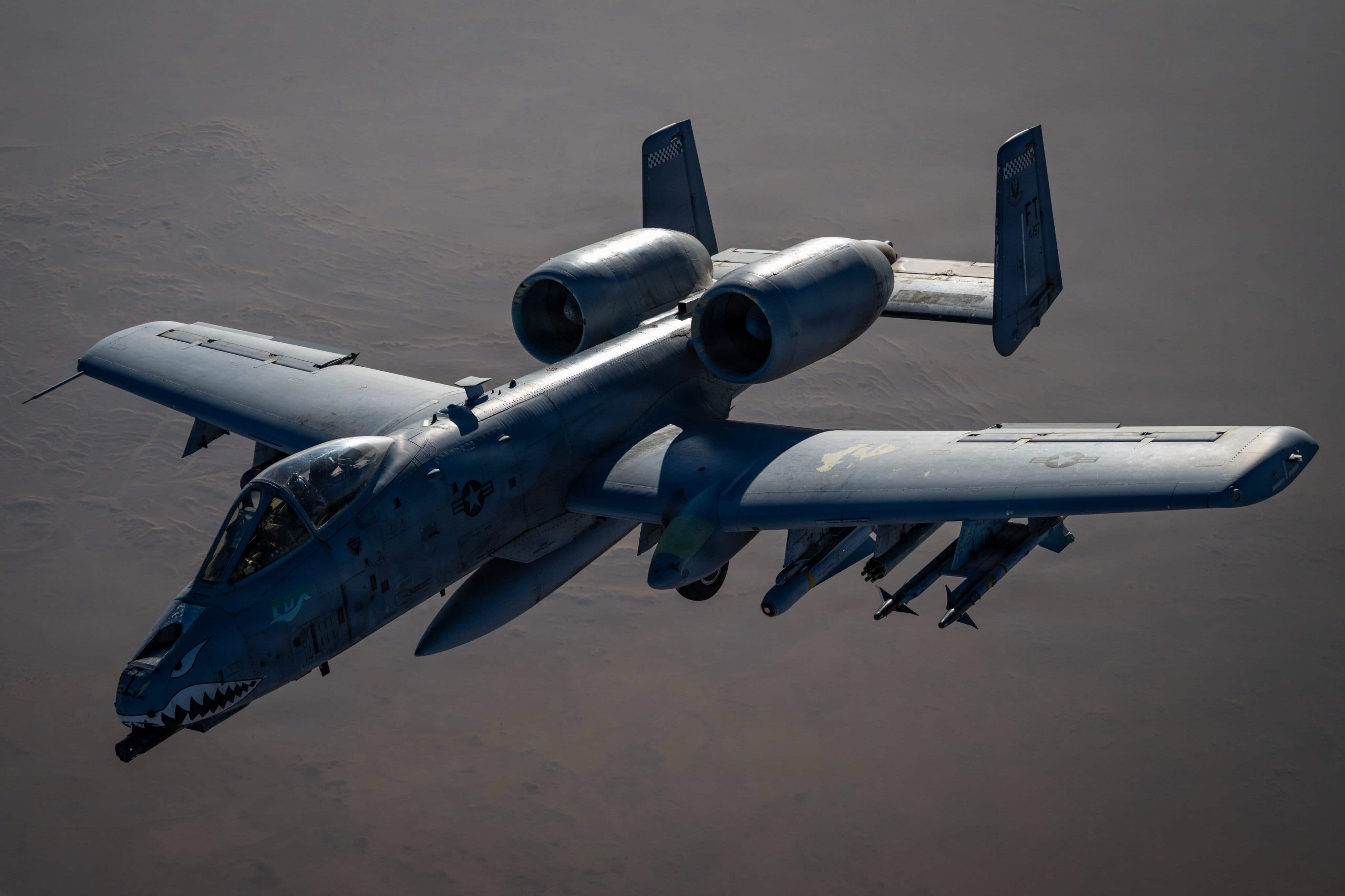
A-10C Thunderbolt II attack aircraft from the 75th Expeditionary Fighter Squadron are flying active combat missions over Iraq in support of Operation Epic Fury, U.S. Central Command (CENTCOM) confirmed on March 15, 2026, releasing the first official imagery of the aircraft operating within the campaign.
The images show each aircraft configured for both anti-surface and counter-drone operations.
The loadout includes two AGM-65 Maverick air-to-surface missiles, two AIM-9M Sidewinder short-range air-to-air missiles, a LAU-131 seven-round rocket pod loaded with Advanced Precision Kill Weapon System II (APKWS II)-guided Hydra 70 rockets, an AN/AAQ-28(V)4 LITENING targeting pod, and a 600-gallon centerline drop tank for extended loiter time.
The aircraft’s GAU-8/A Avenger 30mm rotary cannon has also seen use. Night footage circulating on social media appears to show an A-10 engaging Iran-backed Popular Mobilization Forces (PMF) near Tikrit, Iraq. SOFX has not independently verified the footage.
U.S. Air Force A-10 Thunderbolt II’s receive fuel in-flight while supporting Operation Epic Fury. The A-10 Thunderbolt II can loiter for hours, standing by and ready to execute a mission whenever needed. pic.twitter.com/VjESHLR32Y
— U.S. Central Command (@CENTCOM) March 15, 2026
CENTCOM said the imagery release was intentional. “For allies and partners, that is a sign of American staying power,” the command stated. “For Tehran and the militias aligned with it, it is a warning that US airpower is positioned not for symbolic action, but for prolonged operational effect.”
The APKWS II rockets and AIM-9M Sidewinders are suited to intercept low-cost unmanned aerial vehicles (UAVs) such as the Shahed-136. The A-10 lacks its own radar, meaning pilots would depend on external cueing to locate airborne threats. The aircraft are operating from Muwaffaq Salti Air Base in Jordan and are not flying missions over Iran itself, where the platform’s low-altitude combat profile would expose it to mobile air defense systems and man-portable air defense systems (MANPADs).
USAF A-10 carrying out attacks on the PMF north of Tikrit, Iraq overnight. pic.twitter.com/TEUPMFRaLQ
— Woofers (@NotWoofers) March 13, 2026
The A-10’s deployment comes as its future within the Air Force remains unresolved. Congress blocked the service’s plan to retire all approximately 162 remaining A-10Cs in 2026 through a provision in the National Defense Authorization Act for Fiscal Year 2026 titled “Prohibition on Retirement of A-10 Aircraft,” which bars FY2026 funds from reducing the fleet below 103 aircraft.
The Air Force did not request maintenance and sustainment funding for the platform in the FY2026 budget, leaving its long-term support structure in question.