Ukrainian forces are rapidly advancing their unmanned ground vehicle (UGV) capabilities through front-line missions and coordinated industry testing, according to the Ukraine-based think tank Snake Island Institute (SII).
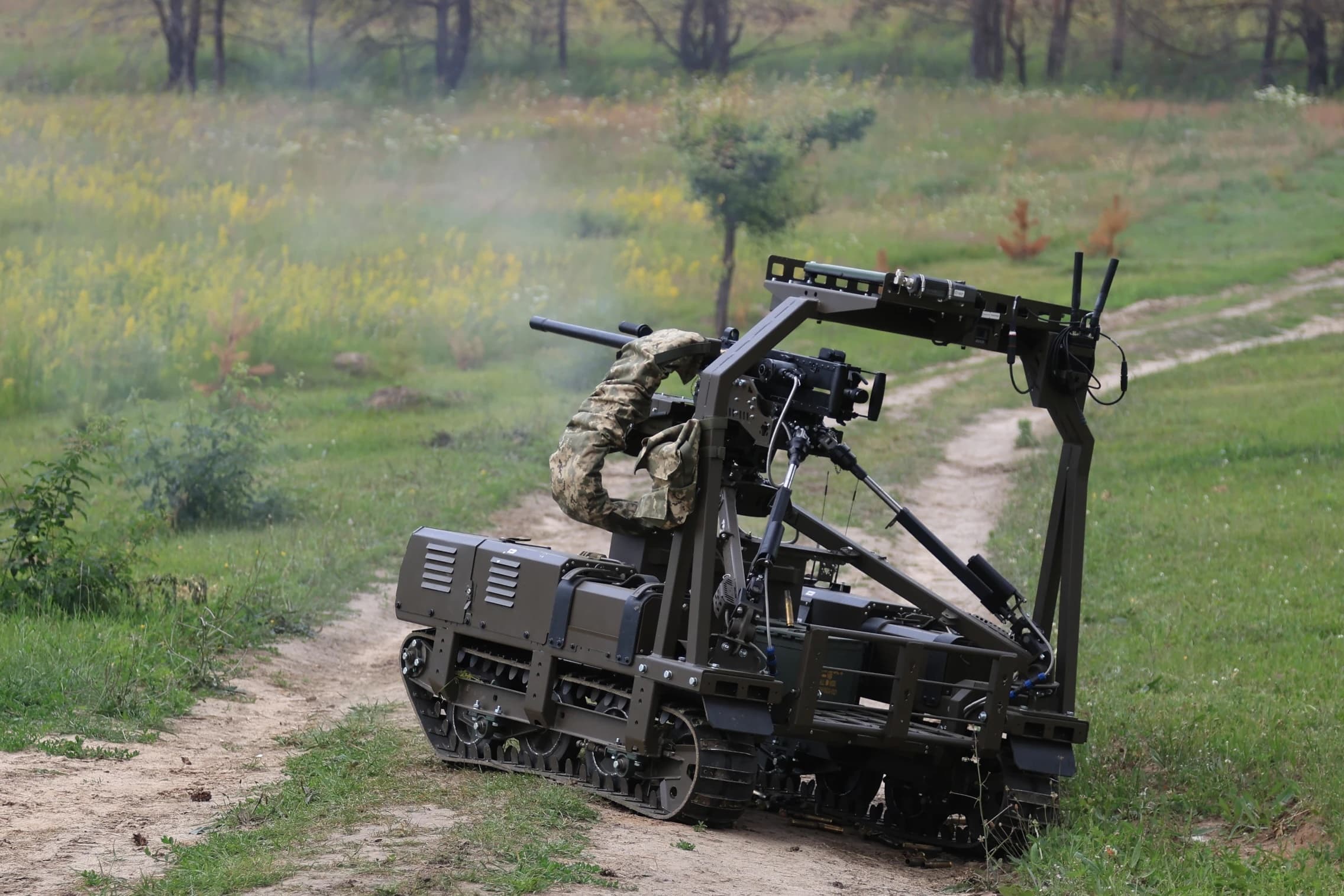
In its latest report, the SII highlighted an operation by the recently formed “NC13” UGV unit of Ukraine’s 3rd Assault Brigade, during which operators remotely delivered and detonated three FAB-250 aviation bombs, totaling 750 kilograms, using a UGV named Zmiy.
The strike destroyed a key Russian crossing point and severed supply routes. According to SII, the operation marked the first known instance of aviation bombs being deployed by a UGV in modern warfare.
In recent months, Ukrainian forces have also used the Zmiy UGV for rescue operations.
Last October, a wounded soldier from the 59th Brigade, Stepovi Khizhaki, was evacuated from the frontline by the Zmiy. According to Brave1, the robot withstood hits from 5.45mm bullets, 152mm shell explosions, a landmine, and an FPV drone attack before successfully delivering the soldier to medics.
An example of how technologies save lives. A wounded soldier from the 59th Brigade STEPOVI KHIZHAKI was evacuated by the “ZMIY Logistic” UGV by a Brave1 member Rovertech. The robot withstood hits from 5.45mm bullets, 152mm shell explosions, a mine, and an FPV drone attack. pic.twitter.com/0EQu3PJxSf
— BRAVE1 (@BRAVE1ua) October 15, 2025
A month earlier, the Ukrainian “Khartia” Brigade used a UGV to evacuate a cat from the frontline. Nicknamed Prapor (Flag), the cat had lived with soldiers for months. “The evacuation mission lasted three hours. Prapor was delivered safe and unharmed to the final point. He is now at the company’s base and gradually adapting to a new stage of his life,” the brigade said.
Aside from testing UGVs in combat and rescue operations, SII notes that Ukraine also conducts trials to help manufacturers improve the systems.
In October, Ukraine held its first full-scale Strike UGV Crash Test, featuring more than 10 UGVs from developers including DevDroid, FRDM, UGV Robotics, Moroz, Rovertech, and Tank Bureau. The test subjected the vehicles to realistic combat conditions, including mud, mined areas, and uneven terrain.
On 22–23 October, a crash test of strike UGVs took place near Lviv.
The aim was to test strike UGVs in conditions close to real combat, to give manufacturers honest feedback and speed up the delivery of reliable solutions to the front. Fourteen strike UGVs from @devdroid_tech,… pic.twitter.com/3QuEN3Ue1I
— Defender Media 🇺🇦 (@DefenderMediaUA) October 27, 2025
Following the test, developers received detailed feedback to improve maneuverability, durability, and power systems. “Less than 40% of UGVs completed the crash test, underscoring the need for more robust engineering standards,” SII notes.
Another notable development for the UGV community recently, according to SII, was the expansion of the Army of Drones Bonus program to include UGVs.
The program rewards soldiers with digital points for providing video evidence of successful drone strikes on Russian targets. These points can be redeemed for new military equipment through the online platform Brave1 Market.
“Troops who earn combat bonuses for verified target destruction can now exchange those points for verified UGVs, giving units a direct pathway to acquire the platforms they need without relying solely on centralized procurement,” SII said.
Since August, the Army of Drones Bonus program has provided Ukrainian forces with 71,000 pieces of equipment, valued at more than 2.8 billion UAH ($66.7 million), according to Militarnyi.